Bhagavad Gita · Chapter 11 · Viśvarūpadarśana Yoga · Verse 33
Rise up, and be the instrument of something greater. — Bhagavad Gita 11.33 meaning in Hindi and English
Sanskrit shloka · संस्कृत श्लोक
तस्मात्त्वमुत्तिष्ठ यशो लभस्व । जित्वा शत्रून् भुङ्क्ष्व राज्यं समृद्धम् । मयैवैते निहताः पूर्वमेव । निमित्तमात्रं भव सव्यसाचिन् ॥
tasmāttvamuttiṣṭha yaśo labhasva jitvā śatrūn bhuṅkṣva rājyaṃ samṛddham mayaivaite nihatāḥ pūrvameva nimittamātraṃ bhava savyasācin
Hindi meaning · हिंदी अर्थ
यह श्लोक मोह की निद्रा त्यागकर चेतना को जाग्रत करने (उत्तिष्ठ) और स्वधर्म के पालन से दिव्य यश पाने का संदेश देता है। विवेक से काम-क्रोध आदि आंतरिक शत्रुओं पर विजय पाकर ही साधक अखंड आत्म-शांति रूपी समृद्ध राज्य का अधिकारी बनता है। परमात्मा के विधान में असत्य का अंत पहले से निश्चित है; अतः हे कुशल साधक (सव्यसाची), कर्तापन का अहंकार त्यागकर बांसुरी की तरह केवल ईश्वर का निर्मल निमित्त बन जाओ।
English meaning
“This verse gives the message of awakening one's consciousness (uttishtha) by casting off the slumber of delusion and attaining divine glory through following one's righteous duty (svadharma). Only by conquering internal enemies such as desire and anger through wisdom does a seeker become worthy of the prosperous kingdom of unbroken inner peace. In the divine order of the Supreme, the end of untruth is already certain; therefore, O skilled seeker (Savyasachi), renounce the ego of doership and become a pure instrument (nimitta) of God, just like a flute.”
Reflection for today · आज का चिंतन
Do your duties with courage, and let go of the burden of controlling everything. You are an instrument, and that is a freeing thing.
साहस से अपना कर्तव्य निभाइए और सब कुछ नियंत्रित करने का बोझ छोड़ दीजिए। आप एक निमित्त हैं, और यह मुक्त करने वाली बात है।
A story for this verse · एक कथा
From Ego to Surrender: Becoming God’s Pure Instrument
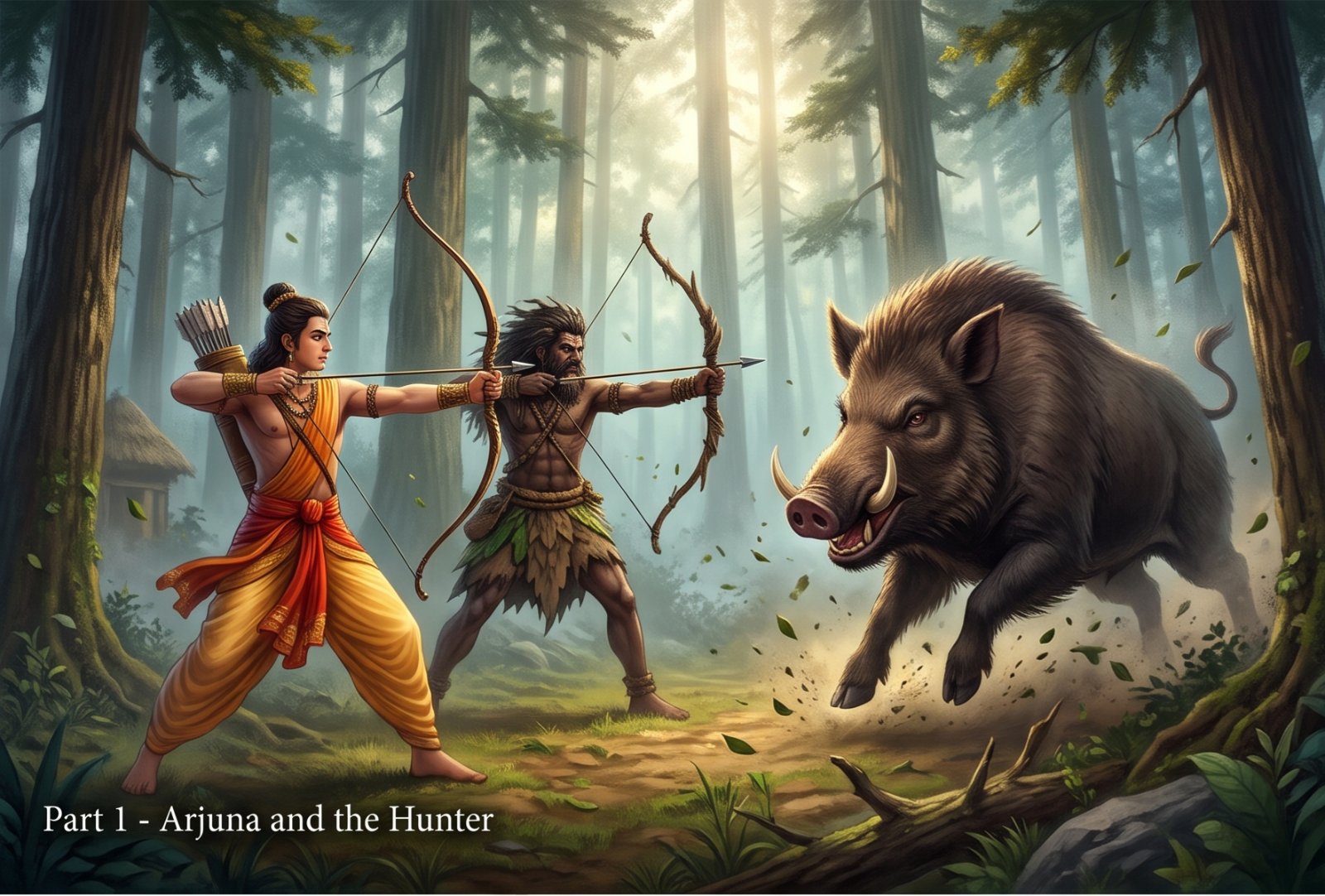
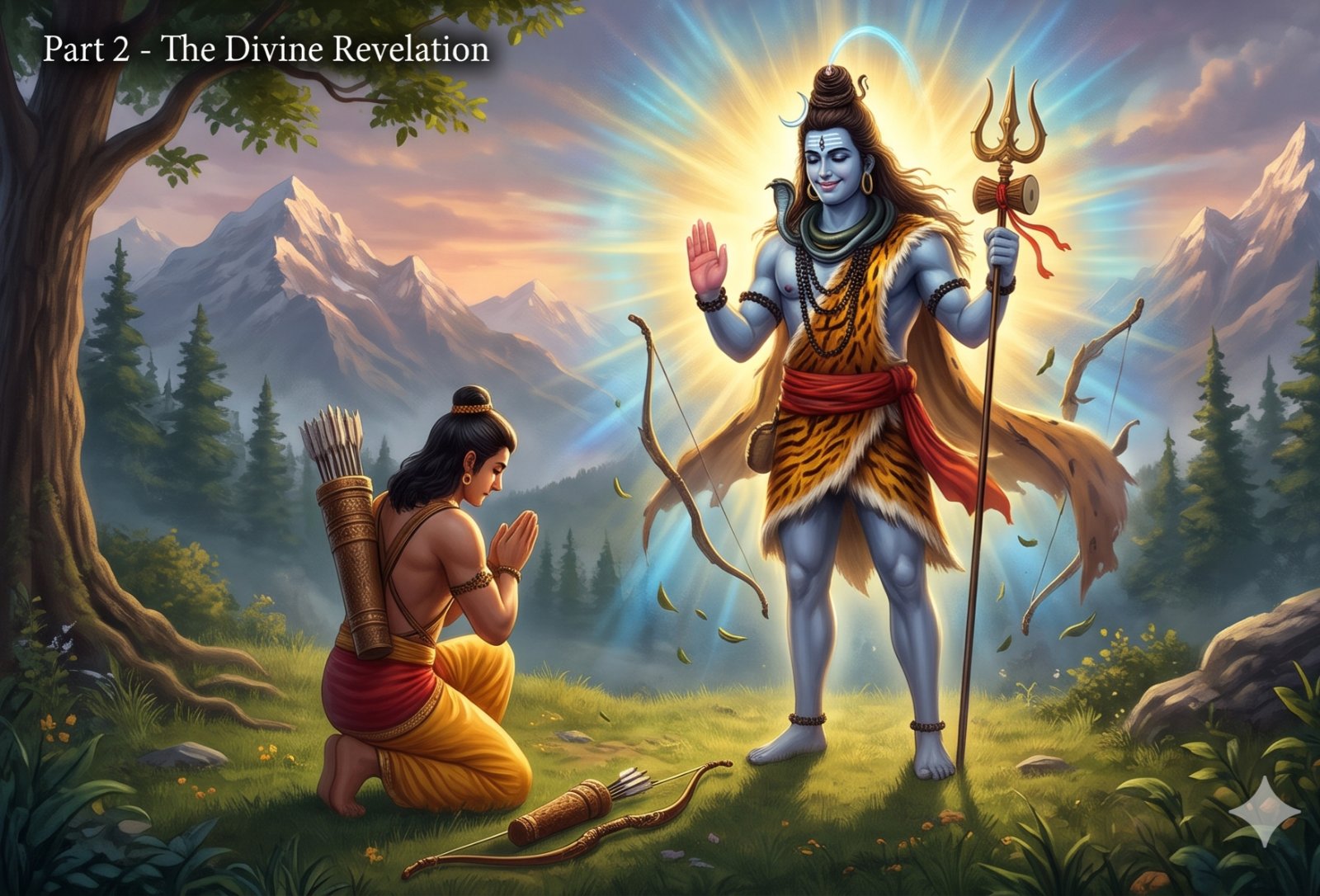 Once upon a time, the great archer of the Mahabharata, Arjuna, went to the peaceful Himalayan mountains to perform penance. Arjuna was skilled at shooting arrows with equal mastery using both hands, which is why he was also called ‘Savyasachi’. Every day, he meditated to calm his mind and attain divine wisdom. One day, while all the animals and birds of the forest were roaming peacefully, a huge and fierce wild boar suddenly appeared there. Roaring loudly, it charged toward the hermitage, making the entire forest tremble. Arjuna immediately opened his eyes. Casting aside laziness and hesitation, he stood up and notched an arrow onto his bow to protect righteousness. The very instant Arjuna released his arrow, another arrow came from the opposite direction, struck the boar, and it fell peacefully to the ground. Arjuna looked in astonishment as a forest dweller, disguised as a simple hunter (Kirata), walked toward him with a smile. Both claimed that their own arrow had ended the danger. Hearing this, the hidden ego within Arjuna awakened for a moment. He thought, “I am Savyasachi, the greatest archer of all; how can a simple forest dweller ever match me?” To discover the truth, a test of archery took place between the two. Arjuna shot one celestial arrow after another, yet the forest dweller effortlessly neutralized every single arrow with a gentle smile. Arjuna realized that this could not be an ordinary human being. All his pride and anger melted away instantly. He laid down his bow and arrows and bowed at his feet with folded hands. Seeing Arjuna’s surrender, the forest dweller revealed his true form—he was none other than Lord Shiva himself! Placing his hand on Arjuna’s head, Mahadeva said, “O Savyasachi! Even before you shot your arrow, the end of this crisis had already been decided by My will. You merely became My instrument (nimitta). When a seeker conquers the inner enemies of anger and ego, they become God’s flute, and the Supreme Lord Himself performs noble deeds in the world through them.” That day, Arjuna realized that true victory does not lie in outward strength, but in letting go of ego and becoming an instrument of the Divine.
“True victory lies not in outward strength, but in letting go of ego and becoming a pure instrument of the Divine.”
The lesson
Rise up, and be the instrument of something greater.
Story: पौराणिक कथा