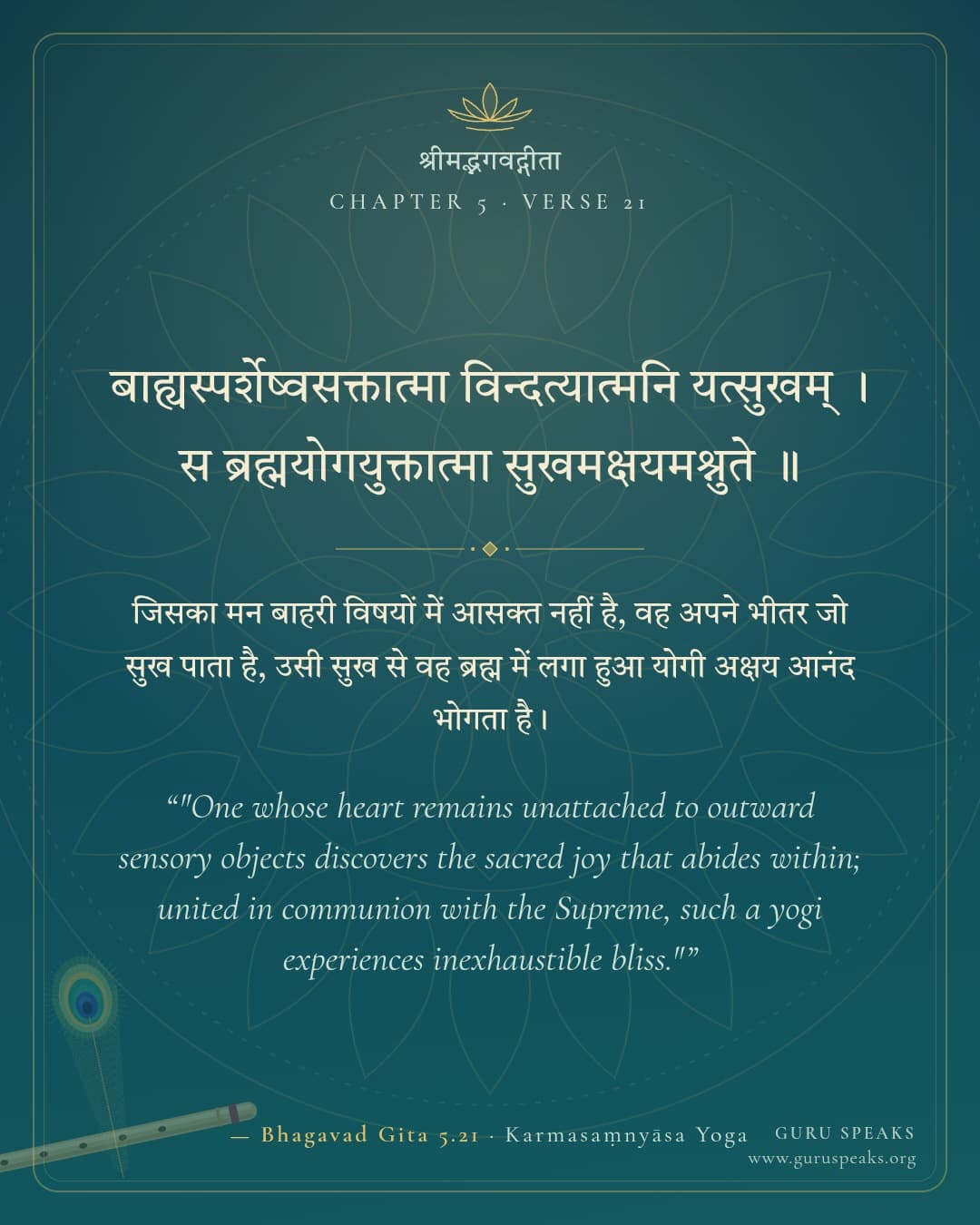
Bhagavad Gita · Chapter 5 · Karmasaṃnyāsa Yoga · Verse 21
The joy found within never runs out. — Bhagavad Gita 5.21 meaning in Hindi and English
Sanskrit shloka · संस्कृत श्लोक
बाह्यस्पर्शेष्वसक्तात्मा विन्दत्यात्मनि यत्सुखम् । स ब्रह्मयोगयुक्तात्मा सुखमक्षयमश्नुते ॥
bāhyasparśeṣvasaktātmā vindatyātmani yatsukham sa brahmayogayuktātmā sukhamakṣayamaśnute
Hindi meaning · हिंदी अर्थ
जिसका मन बाहरी विषयों में आसक्त नहीं है, वह अपने भीतर जो सुख पाता है, उसी सुख से वह ब्रह्म में लगा हुआ योगी अक्षय आनंद भोगता है।
English meaning
“"One whose heart remains unattached to outward sensory objects discovers the sacred joy that abides within; united in communion with the Supreme, such a yogi experiences inexhaustible bliss."”
Reflection for today · आज का चिंतन
Outer pleasures are lovely but temporary. Keep a well of contentment inside you that does not depend on the day’s events.
बाहरी सुख सुंदर हैं पर क्षणिक। अपने भीतर संतोष का एक ऐसा कुआँ बनाए रखिए जो दिन की घटनाओं पर निर्भर न हो।
A story for this verse · एक कथा
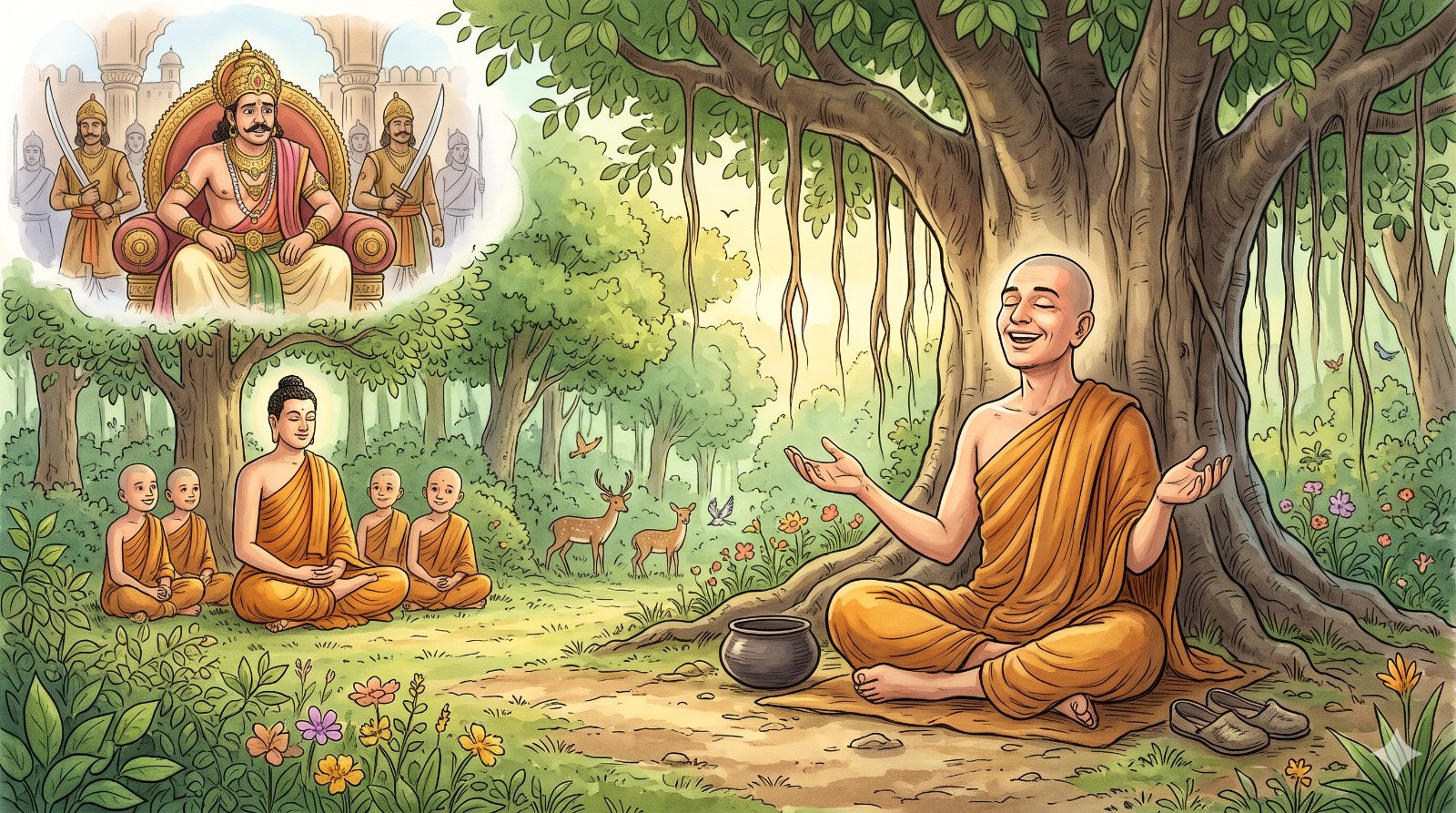
The Inexhaustible Joy Within: The Renunciation of King Bhaddiya
In ancient times, in the kingdom of the Sakyas, there ruled a prosperous monarch named King Bhaddiya. He possessed grand palaces, vast treasuries overflowing with gold and gems, formidable armies, and every pleasure the material world could offer. Yet, despite being the master of an immense empire, his heart never knew true peace. A persistent shadow of fear and suspicion tormented him—fear of hidden enemies, thieves, and palace conspiracies. Even within impenetrable royal chambers guarded by armed sentries, his nights were spent in restless anxiety. One day, deeply inspired by the sublime teachings of Gautama Buddha, King Bhaddiya made a momentous resolve to renounce his royal majesty, wealth, and sovereign rule. He took off his ornate robes, donned the simple ochre garments of an ascetic, and retreated into the quiet forest to live as a monk. Stripped of his royal position, he possessed neither an army nor riches; his sole companion was a modest clay alms bowl. One afternoon, as Bhaddiya sat immersed in serene meditation beneath the boughs of a sheltering banyan tree, an overwhelming wave of joy and contentment welled up from the depths of his being. Radiant with bliss, he proclaimed aloud again and again: “Aho sukham! Aho sukham!” (“Oh, what bliss! What supreme happiness!”) Hearing his joyful cries echoing through the woodland, several fellow monks misunderstood him. They assumed that Bhaddiya was reminiscing about his bygone royal days—longing for his grand palace, banquets, and soldiers. Troubled by this thought, they reported the matter to Gautama Buddha. With a gentle, knowing smile, the Buddha summoned Bhaddiya and asked kindly, “Bhaddiya, why do you sit in the solitude of the forest and repeatedly call out ‘Aho sukham’? Does your heart yearn for the lost luxuries of your royal court?” Bhaddiya folded his hands in deep reverence and replied, “No, Blessed One! It is entirely the opposite. When I was a king, surrounded by shields, armed sentries, and boundless comforts, my mind was perpetually imprisoned by dread, suspicion, and unease. Peaceful rest eluded me. But today, having relinquished all craving and attachment to outer possessions, I have nothing left to fear or lose. Beneath the open sky, in the stillness of nature, I dwell completely fearless and tranquil. I need no guards to protect me, for an inexhaustible spring of bliss has awakened within. This inner peace depends on no worldly circumstance. It is this profound and imperishable joy that moves my lips to utter, ‘Aho sukham!’” Turning to the gathered seekers, the Buddha observed, “Behold, this alone is authentic joy. When we withdraw our clinging from perishable worldly things and turn our gaze within, we discover an imperishable peace that no circumstance can ever diminish.” Lesson for Children (Moral): Lasting happiness is never found in external toys, riches, or worldly comforts, for material things inevitably change, break, or fade away. Real, unbreakable joy springs from inner peace, quiet contentment, and a heart free from greed. When we learn to cherish simplicity, we discover a true happiness that stays with us wherever we go.
”True joy resides not in external possessions or the grandeur of palaces, but in the detachment and contentment of the soul; one who is fulfilled within is truly fearless and completely at peace.”
The lesson
The joy found within never runs out.
Story: Sukhavihari jatak tales