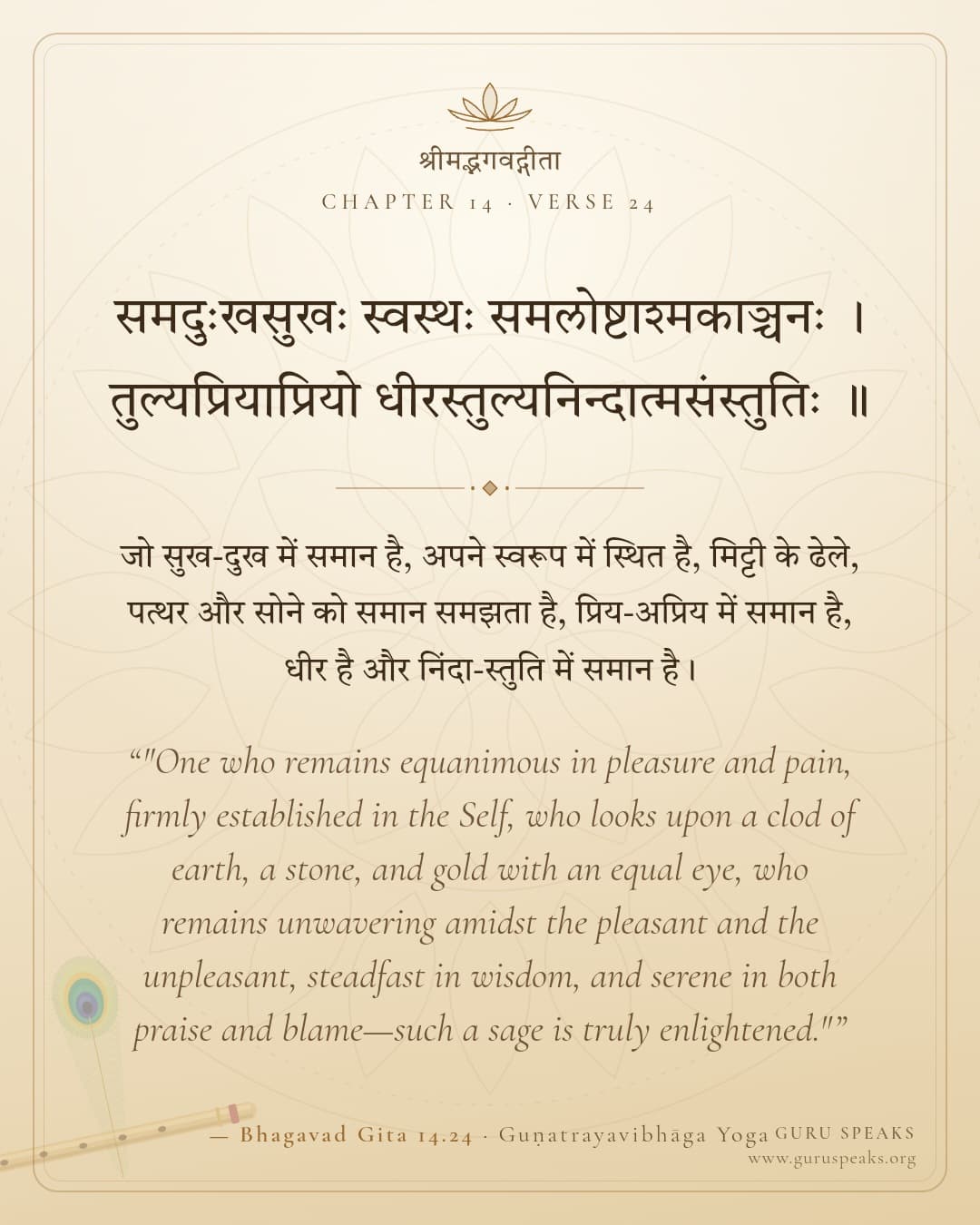
Bhagavad Gita · Chapter 14 · Guṇatrayavibhāga Yoga · Verse 24
To a steady heart, gold and stone weigh the same. — Bhagavad Gita 14.24 meaning in Hindi and English
Sanskrit shloka · संस्कृत श्लोक
समदुःखसुखः स्वस्थः समलोष्टाश्मकाञ्चनः । तुल्यप्रियाप्रियो धीरस्तुल्यनिन्दात्मसंस्तुतिः ॥
samaduḥkhasukhaḥ svasthaḥ samaloṣṭāśmakāñcanaḥ tulyapriyāpriyo dhīrastulyanindātmasaṃstutiḥ
Hindi meaning · हिंदी अर्थ
जो सुख-दुख में समान है, अपने स्वरूप में स्थित है, मिट्टी के ढेले, पत्थर और सोने को समान समझता है, प्रिय-अप्रिय में समान है, धीर है और निंदा-स्तुति में समान है।
English meaning
“"One who remains equanimous in pleasure and pain, firmly established in the Self, who looks upon a clod of earth, a stone, and gold with an equal eye, who remains unwavering amidst the pleasant and the unpleasant, steadfast in wisdom, and serene in both praise and blame—such a sage is truly enlightened."”
Reflection for today · आज का चिंतन
When our worth is not tied to what we own or what others think, we gain remarkable freedom. Notice what you are holding too tightly.
जब हमारी कीमत हमारे सामान या दूसरों की राय से नहीं जुड़ी होती, तो हमें अद्भुत आज़ादी मिलती है। देखिए आप क्या कुछ ज़रूरत से ज़्यादा कसकर पकड़े हैं।
A story for this verse · एक कथा
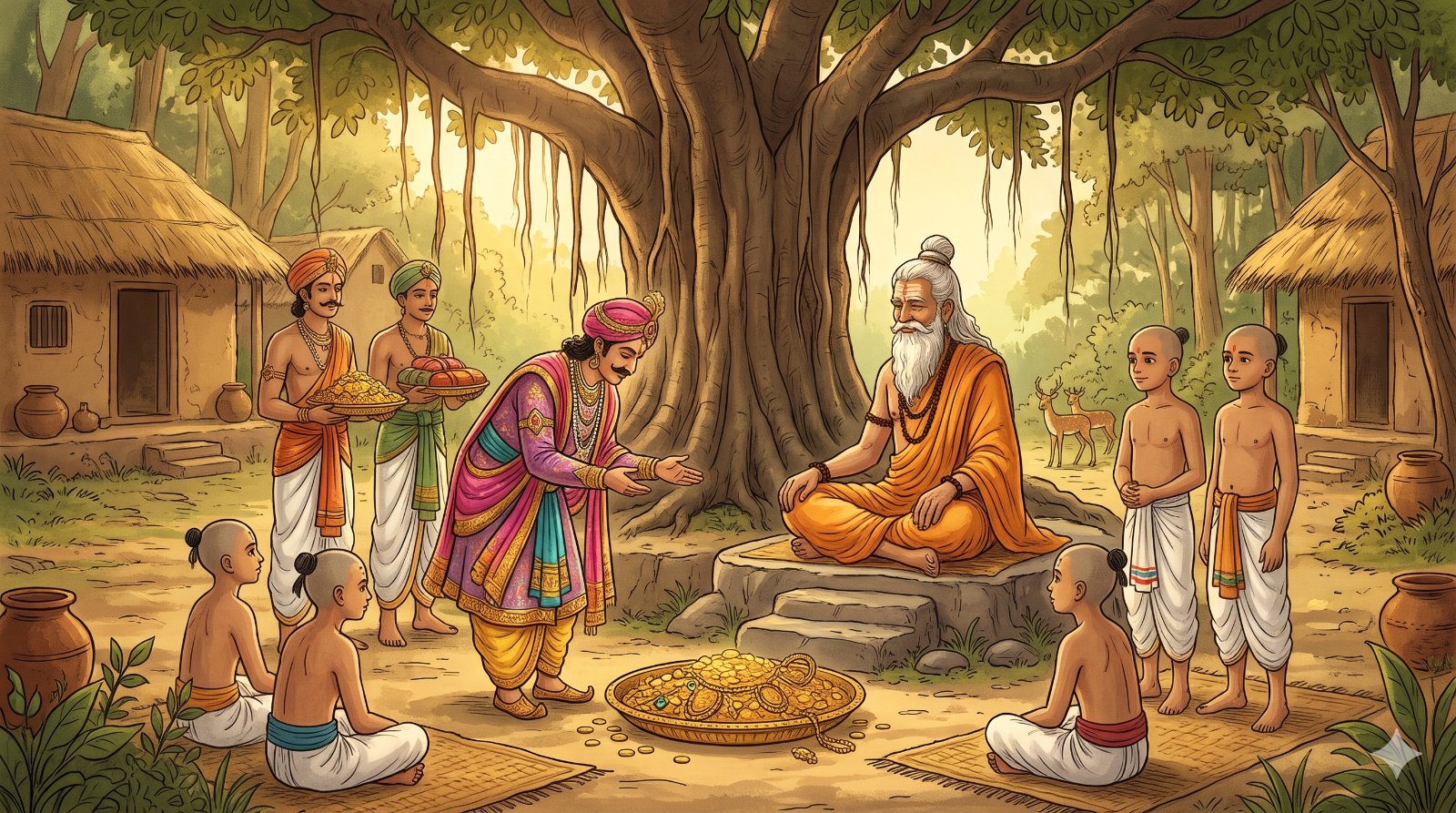
: A Serene Mind, The True Treasure: The Master’s Priceless Lesson
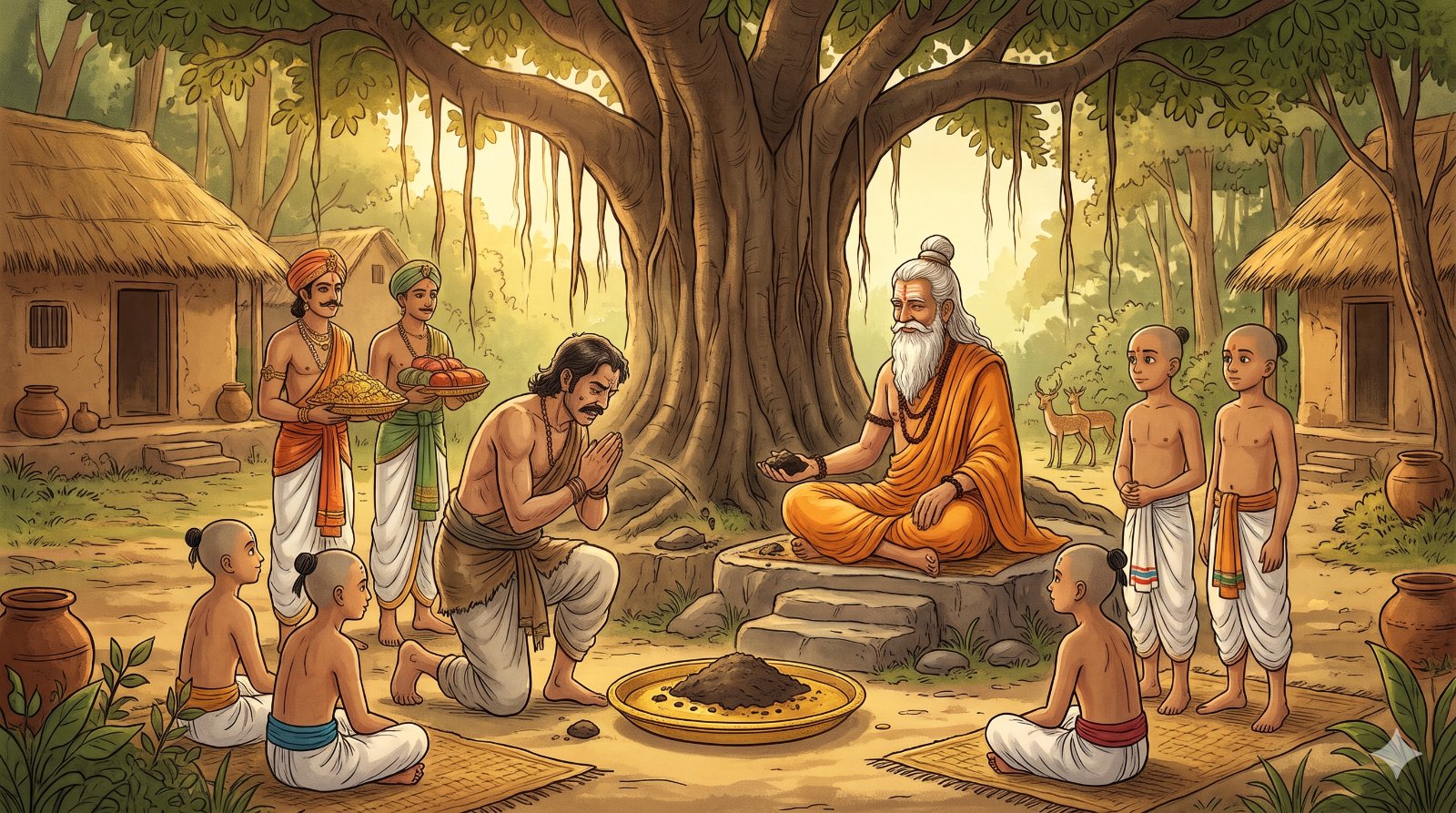 In ancient times, an enlightened sage lived with his young disciples in a tranquil forest hermitage (tapovan). The ashram was filled with natural peace, surrounded by quiet woods and gentle streams. The sage possessed such balanced wisdom that a calm, divine smile always graced his face. Rather than merely teaching scriptures, he taught his students the art of equanimity—remaining undisturbed through all of life’s dualities. One morning, an immensely wealthy merchant arrived at the hermitage in rich silk robes. Followed by servants bearing platters of glittering gold coins and ornaments, he bowed and proclaimed, “O noble sage! Your renown fills the land. In reverence of your unmatched virtue, I offer this priceless gold at your holy feet.” The sage received the offering with a serene smile. The extravagant praise did not awaken pride in his heart, nor did the gleaming treasure stir any greed in his eyes. He remained completely tranquil, looking at the precious gold as if it were nothing more than the earth beneath them, while his young disciples watched the scene in quiet curiosity. Soon after, an envious man appeared at the gates. Resenting the master’s honor, he shouted harsh insults and hurled a stone and a dry clod of earth toward the sage’s seat. “You are no true holy man!” he sneered. “You only put on a show to deceive these innocent children!” Startled, several disciples rushed forward indignantly. But the sage raised his hand, signaling them to remain still. Not a trace of anger clouded his countenance. He looked upon the spiteful man with the very same loving compassion he had shown the wealthy merchant. Picking up the clod of earth and placing the gold platter beside it, the sage asked his pupils, “Tell me, dear children, what difference lies between this gold and this clay for the inner soul?” The disciples remained silent. The sage explained gently, “Both gold and clay emerge from the earth, and both will return to it. Those attached to worldly glamour rejoice over gold and sorrow over clay. But for one anchored in the true Self within, both are merely transient dust.” Turning to the critic, the sage asked warmly, “If someone brings a gift and you decline to accept it, with whom does it remain?” “With the giver,” the man whispered. “Indeed,” the sage smiled. “The merchant offered praise and gold, which I did not cling to. You offered insults and clay, which I refused to receive. Thus, your anger stays entirely with you. My mind is like a deep lake—whether flowers or pebbles fall upon it, its depths remain untouched.” Overwhelmed by such grace, the critic knelt and sought forgiveness. The disciples understood that maintaining an undisturbed mind through praise, blame, gold, and clay is the greatest spiritual strength.
”Our mind must be like a tranquil lake—whether one scatters a lotus flower (praise and wealth) upon it or tosses a dry pebble (criticism and anger), its inner depths must remain forever peaceful and undisturbed.”
The lesson
To a steady heart, gold and stone weigh the same.
Story: Original tales