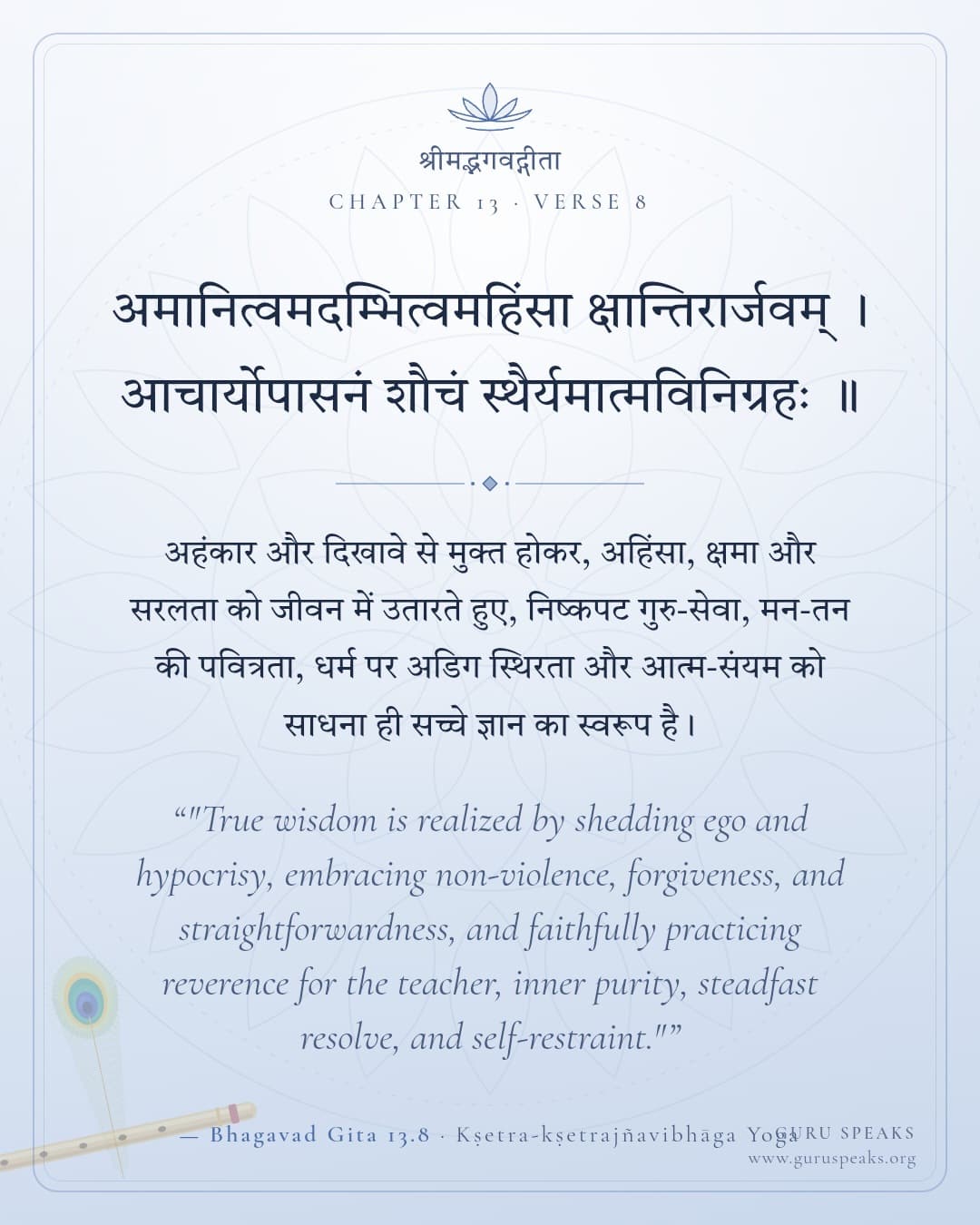
Bhagavad Gita · Chapter 13 · Kṣetra-kṣetrajñavibhāga Yoga · Verse 8
Humility, honesty and patience: the marks of true knowledge. — Bhagavad Gita 13.8 meaning in Hindi and English
Sanskrit shloka · संस्कृत श्लोक
अमानित्वमदम्भित्वमहिंसा क्षान्तिरार्जवम् । आचार्योपासनं शौचं स्थैर्यमात्मविनिग्रहः ॥
amānitvamadambhitvamahiṃsā kṣāntirārjavam ācāryopāsanaṃ śaucaṃ sthairyamātmavinigrahaḥ
Hindi meaning · हिंदी अर्थ
अहंकार और दिखावे से मुक्त होकर, अहिंसा, क्षमा और सरलता को जीवन में उतारते हुए, निष्कपट गुरु-सेवा, मन-तन की पवित्रता, धर्म पर अडिग स्थिरता और आत्म-संयम को साधना ही सच्चे ज्ञान का स्वरूप है।
English meaning
“"True wisdom is realized by shedding ego and hypocrisy, embracing non-violence, forgiveness, and straightforwardness, and faithfully practicing reverence for the teacher, inner purity, steadfast resolve, and self-restraint."”
Reflection for today · आज का चिंतन
The Gita names wisdom not by what we know, but by how we live. Choose one of these qualities and practise it today.
गीता ज्ञान की पहचान इससे नहीं बताती कि हम क्या जानते हैं, बल्कि इससे कि हम कैसे जीते हैं। इनमें से एक गुण चुनकर आज अभ्यास कीजिए।
A story for this verse · एक कथा
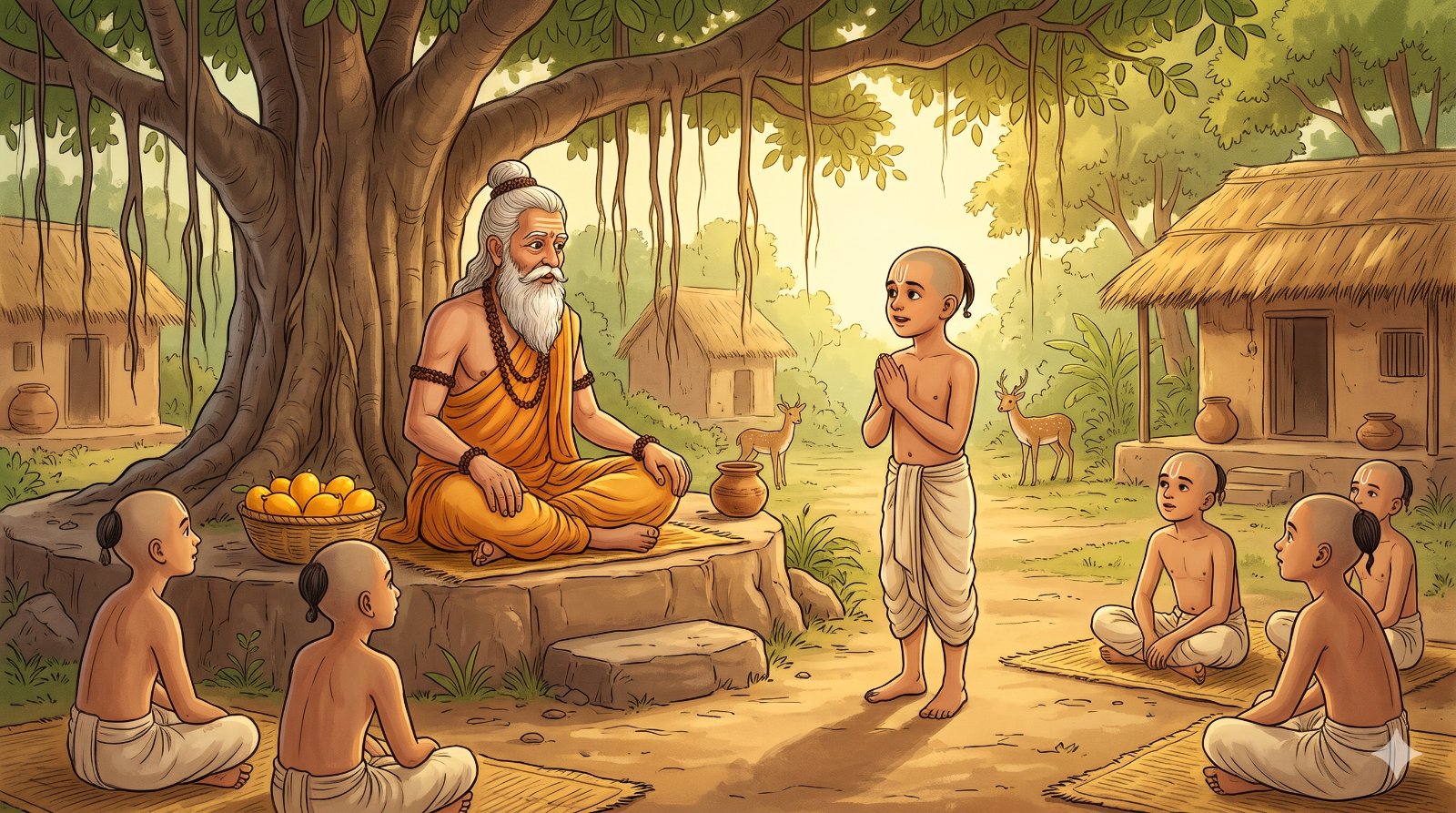
Divinity in Simplicity: The Journey of Satyakama
 In ancient times, there lived a young boy named Satyakama. Deep within his tender heart burned an ardent longing to know the Divine and attain self-realization. When he reached the age to receive sacred education, he turned to his mother, Jabala, and asked, “Mother! I wish to seek admission to a gurukul to acquire spiritual knowledge. When the revered preceptor inquires about my lineage and family name (gotra), what shall I tell him?” Jabala looked at her son with loving simplicity and said, “My child, in my youth, I moved constantly from one home to another serving others, and I never learned of our family lineage. Go to the teacher and speak the pure truth: tell him your name is Satyakama, your mother’s name is Jabala, and therefore you are known as Satyakama Jabala.” With innocence and trust, Satyakama arrived at the forest hermitage of Sage Gautama, where princes and noble scholars were gathered. When the sage asked the young boy about his parentage, Satyakama, without the slightest hesitation, fear, or pretense , repeated his mother’s words word for word. Beholding this unblemished straightforwardness and the total absence of false pride , Sage Gautama was deeply moved. He embraced the boy and proclaimed, “None but a true seeker of the highest order could possess the courage to speak such unvarnished truth.
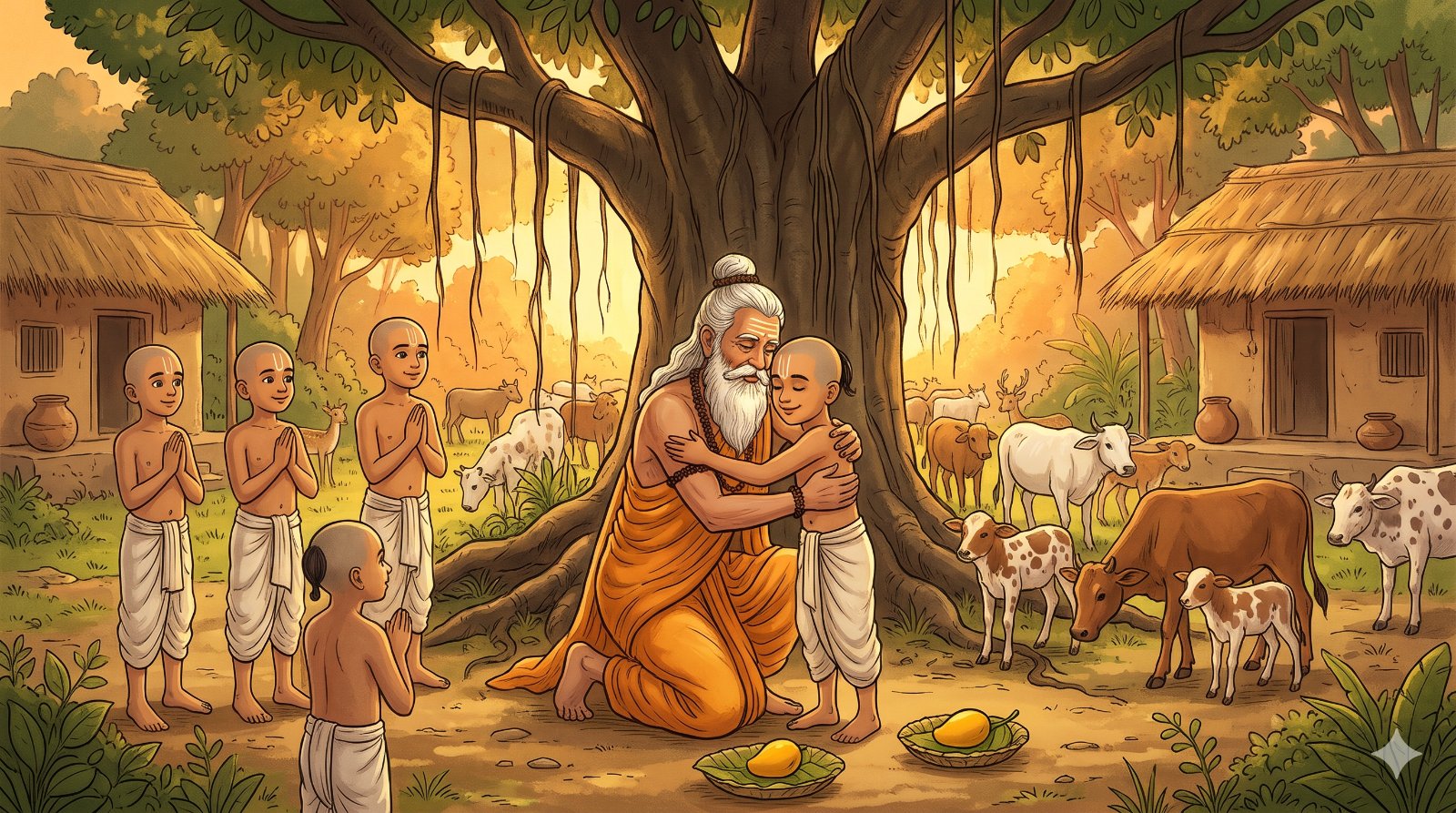 Your heart is pure, and you are truly worthy of divine wisdom.” The master accepted Satyakama as his disciple. To test his endurance, patience, and inner discipline, Sage Gautama entrusted him with a herd of four hundred weak, lean cows and instructed, “My son, take these cattle deep into the meadows. Return only when their number multiplies to a thousand.” Without a trace of doubt or complaint, Satyakama accepted his teacher’s command with absolute reverence . For years, he lived alone in the wilderness. In every hardship, he remained composed and patient (Kshanti), governed his senses with quiet restraint , sheltered every living creature with tenderness and non-violence , maintained outer and inner purity , and remained steadfast in his duty (Sthairyam). When the herd finally grew to a thousand healthy cows, the sacred forces of nature and the Supreme Divine, enchanted by his guileless devotion, revealed the secret of supreme self-knowledge to him. When Satyakama returned to the hermitage, Sage Gautama looked upon him with wonder and joy, saying, “Beloved Satyakama, your face shines with the radiant glow of a knower of Brahman. By living these sacred virtues, you have attained the highest wisdom.”
”No lineage is greater than truth and simplicity, and no wisdom surpasses selfless devotion to duty; where ego dissolves, the Divine awakens.”
The lesson
Humility, honesty and patience: the marks of true knowledge.
Story: Chandogya upanishad