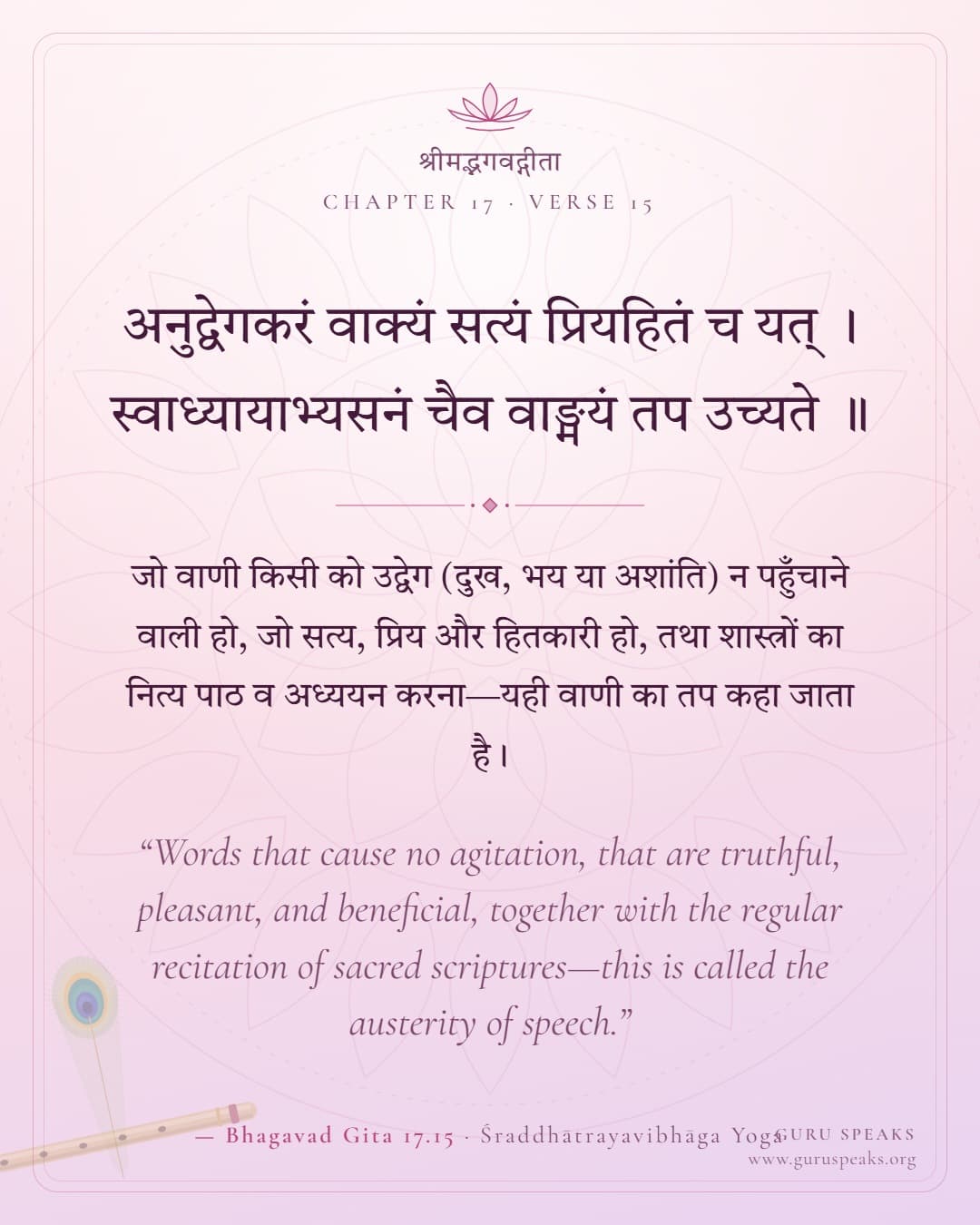
Bhagavad Gita · Chapter 17 · Śraddhātrayavibhāga Yoga · Verse 15
Speak words that are true, kind and helpful. — Bhagavad Gita 17.15 meaning in Hindi and English
Sanskrit shloka · संस्कृत श्लोक
अनुद्वेगकरं वाक्यं सत्यं प्रियहितं च यत् । स्वाध्यायाभ्यसनं चैव वाङ्मयं तप उच्यते ॥
anudvegakaraṃ vākyaṃ satyaṃ priyahitaṃ ca yat svādhyāyābhyasanaṃ caiva vāṅmayaṃ tapa ucyate
Hindi meaning · हिंदी अर्थ
जो वाणी किसी को उद्वेग (दुख, भय या अशांति) न पहुँचाने वाली हो, जो सत्य, प्रिय और हितकारी हो, तथा शास्त्रों का नित्य पाठ व अध्ययन करना—यही वाणी का तप कहा जाता है।
English meaning
“Words that cause no agitation, that are truthful, pleasant, and beneficial, together with the regular recitation of sacred scriptures—this is called the austerity of speech.”
Reflection for today · आज का चिंतन
True discipline of speech is speaking words that are harmless, honest, kind, and beneficial to others, while regularly chanting sacred scripture for oneself.
वाणी का सच्चा तप यही है कि दूसरों से सदा सत्य, प्रिय, अहानिकर और हितकारी बोला जाए, तथा नित्य धर्मग्रंथों का पाठ व स्वाध्याय किया जाए।
A story for this verse · एक कथा

The Flawed Vow of Sage Kaushika
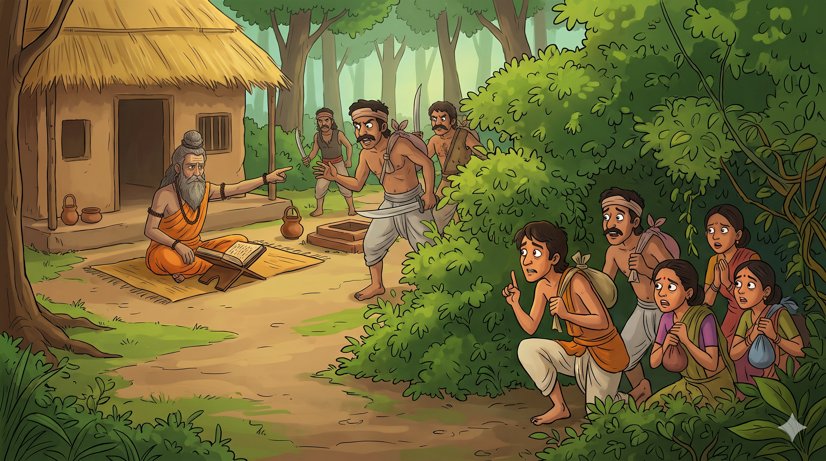 In the Mahabharata, an ascetic named Kaushika took a solemn vow to always speak the truth. He spent his days chanting sacred mantras and became widely known for never telling a lie.
One afternoon, a group of terrified travelers ran past his hermitage, fleeing from ruthless bandits. Desperate to save their lives, they hid in the thick forest bushes nearby.
Moments later, the armed bandits arrived. Knowing Kaushika’s strict reputation, their leader asked, “Sage, tell us where those travelers went.”
Kaushika was torn. He clung blindly to the literal fact, forgetting the deeper purpose of speech. Believing that truth was merely stating facts regardless of consequences, he pointed straight toward the thicket and said, “They are hiding right there.”
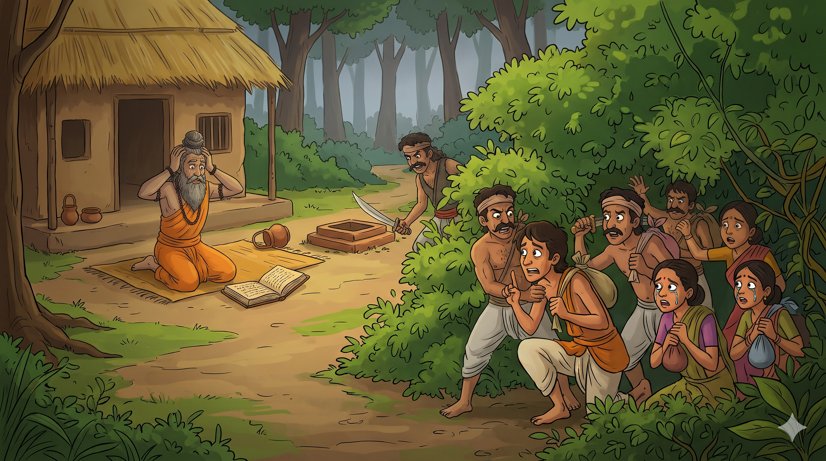 The bandits dragged out the helpless travelers and slaughtered them on the spot. Kaushika believed he had protected his virtue by not lying, but upon his death, the gods turned him away from the higher realms.
The scriptures explain that Kaushika failed the true test of speech (Vāṅmaya Tapas). A fact spoken without kindness or concern for welfare—one that brings slaughter and terror—loses the sanctity of truth. True speech must never provoke senseless distress (anudvega-karam); it must be spoken with goodwill and serve the genuine protection and upliftment of others (priya-hitam).
Moral Merely stating raw facts is not true virtue if it causes harm; genuine truth must always protect life, prevent needless distress, and serve the greater good (satyam, priya-hitam).
Source Mahabharata, Karna Parva (Chapter 69, in Sri Krishna’s discourse to Arjuna on the true nature of Dharma and truth).
The lesson
Speak words that are true, kind and helpful.