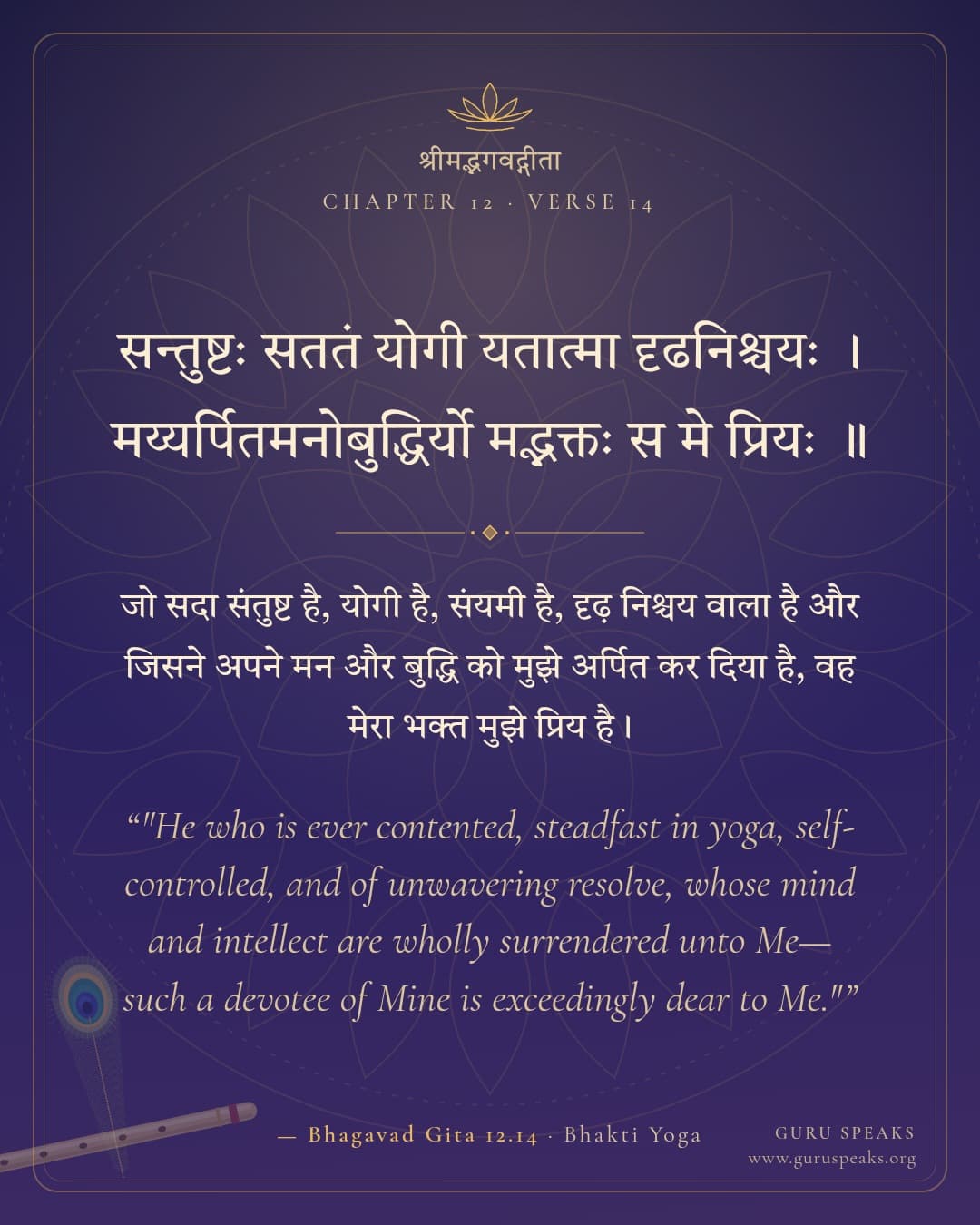
Bhagavad Gita · Chapter 12 · Bhakti Yoga · Verse 14
Contented, disciplined and devoted: such a person is dear to the Divine. — Bhagavad Gita 12.14 meaning in Hindi and English
Sanskrit shloka · संस्कृत श्लोक
सन्तुष्टः सततं योगी यतात्मा दृढनिश्चयः । मय्यर्पितमनोबुद्धिर्यो मद्भक्तः स मे प्रियः ॥
santuṣṭaḥ satataṃ yogī yatātmā dṛḍhaniścayaḥ mayyarpitamanobuddhiryo madbhaktaḥ sa me priyaḥ
Hindi meaning · हिंदी अर्थ
जो सदा संतुष्ट है, योगी है, संयमी है, दृढ़ निश्चय वाला है और जिसने अपने मन और बुद्धि को मुझे अर्पित कर दिया है, वह मेरा भक्त मुझे प्रिय है।
English meaning
“"He who is ever contented, steadfast in yoga, self-controlled, and of unwavering resolve, whose mind and intellect are wholly surrendered unto Me—such a devotee of Mine is exceedingly dear to Me."”
Reflection for today · आज का चिंतन
Contentment with steady effort is a lovely way to live. Be grateful for what you have, and keep going with resolve.
संतोष के साथ स्थिर प्रयास जीने का सुंदर तरीका है। जो है उसके लिए आभारी रहिए और दृढ़ता से चलते रहिए।
A story for this verse · एक कथा
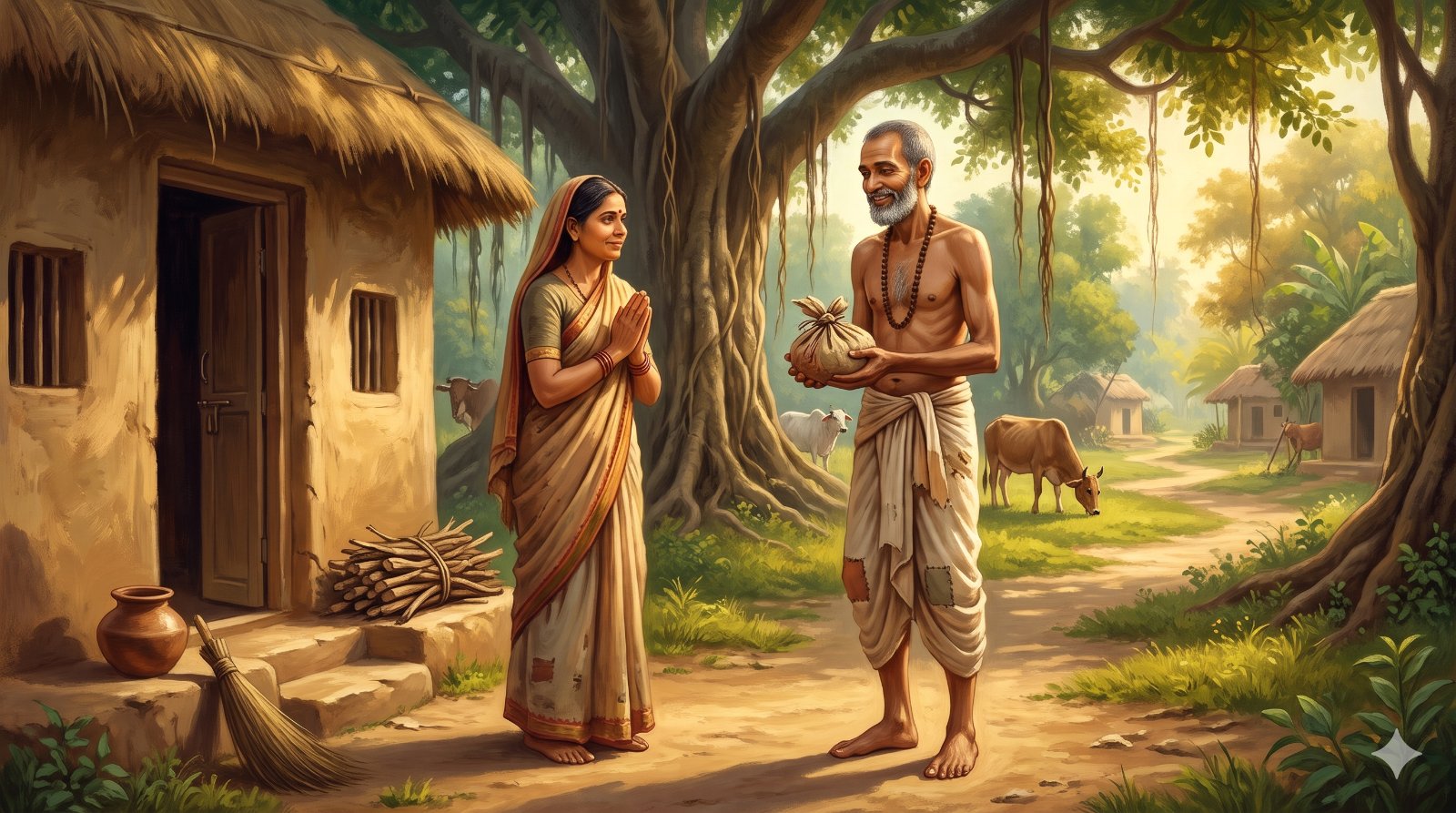
True Contentment and Unconditional Love: The Story of Bhakta Sudama
 In ancient Ujjayini, at the hermitage of Sage Sandipani, Sri Krishna and Sudama were inseparable childhood friends. They studied together, gathered firewood from the forest, and lived in monastic simplicity. Upon completing their education, Krishna eventually became the revered King of Dwarka, while Sudama chose a life of austere detachment, self-control, and quiet contemplation. Sudama possessed neither wealth nor a grand dwelling. He lived with his devoted wife in a modest, fragile thatched hut. Whatever meager, unsolicited alms came his way, he accepted with profound gratitude, never harboring greed or discontent. At times, the hearth remained unlit for days, yet not a trace of anguish or despair ever crossed his face. He remained perpetually serene, disciplined in his senses (yatātmā), and steadfastly absorbed in the remembrance of the Lord. One day, his wife Susheela gently murmured with deep hesitation, “My lord, your beloved childhood friend is now the benevolent King of Dwarka. He is the shelter of the helpless. Why not pay him a visit?”
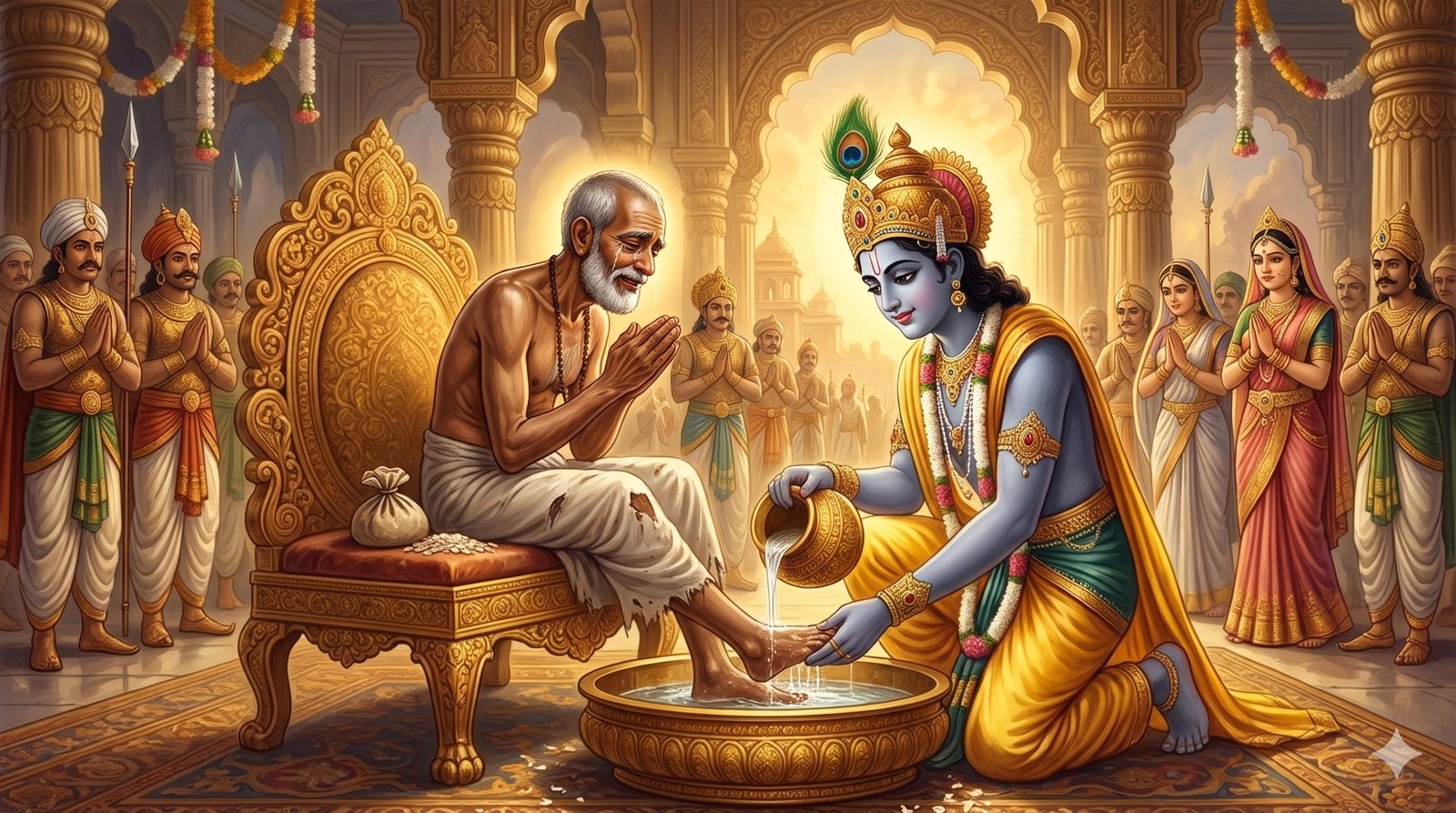 Sudama set out not with the craving for riches, royal favor, or gold, but with the sacred, unyielding resolve (dṛḍha-niścaya) merely to behold his beloved companion once more. As a humble offering, his hut yielded only four handfuls of coarse, chipped flattened rice (poha), which he lovingly tied into an old, frayed cloth. Treading barefoot over long, rugged paths, Sudama finally reached the magnificent golden gates of Dwarka. Seeing an emaciated hermit dressed in worn garments, the guards paused in wonder. Yet, the instant Krishna heard his childhood companion’s name, He cast aside His royal scepter, leapt from the throne, and ran barefoot through the courtyards. Overflowing with divine affection, the Lord drew Sudama into a tight, tearful embrace. Krishna escorted him into the sanctum of the palace, seated him upon His own radiant throne, and was so moved by the sight of His friend’s thorn-pricked feet that tears poured from His eyes, washing Sudama’s feet in pure love. Sensing Sudama’s shyness, Krishna tenderly claimed the frayed bundle of flattened rice, declaring it to be the sweetest nectar in all three worlds. Sudama never asked for a single coin; his heart and intellect were entirely surrendered to divine love (mayy-arpita-mano-buddhiḥ). The Lord, enchanted by this utterly contented, pure, and desireless devotee, blessed him with boundless grace and celestial abundance without him ever having to utter a word.
”True contentment and selfless love are dearest to the Divine; where worldly desires cease, God Himself rushes to embrace the soul
The lesson
Contented, disciplined and devoted: such a person is dear to the Divine.
Story: Original