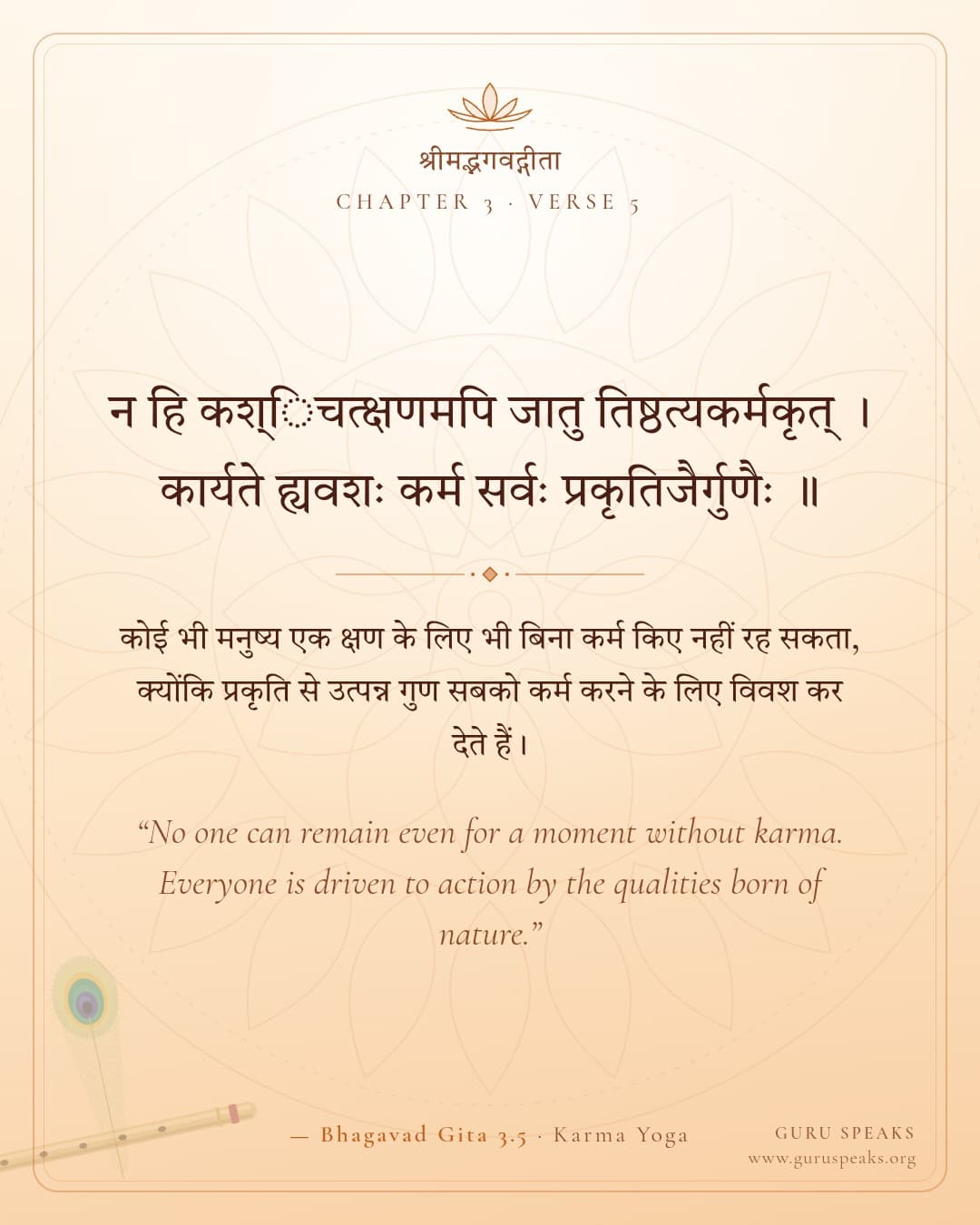
Bhagavad Gita · Chapter 3 · Karma Yoga · Verse 5
No one can stay still for even a moment. Choose your action well. — Bhagavad Gita 3.5 meaning in Hindi and English
Sanskrit shloka · संस्कृत श्लोक
न हि कश्िचत्क्षणमपि जातु तिष्ठत्यकर्मकृत् । कार्यते ह्यवशः कर्म सर्वः प्रकृतिजैर्गुणैः ॥
na hi kaśicatkṣaṇamapi jātu tiṣṭhatyakarmakṛt kāryate hyavaśaḥ karma sarvaḥ prakṛtijairguṇaiḥ
Hindi meaning · हिंदी अर्थ
कोई भी मनुष्य एक क्षण के लिए भी बिना कर्म किए नहीं रह सकता, क्योंकि प्रकृति से उत्पन्न गुण सबको कर्म करने के लिए विवश कर देते हैं।
English meaning
“No one can remain even for a moment without karma. Everyone is driven to action by the qualities born of nature.”
Reflection for today · आज का चिंतन
Even sitting silent, the mind and body are at work. Since we must act anyway, let us act with awareness and purpose.
चुप बैठे हुए भी मन और शरीर कर्म में लगे रहते हैं। जब कर्म से बचा ही नहीं जा सकता, तो उसे सजगता और उद्देश्य से कीजिए।
A story for this verse · एक कथा
Why Doing Nothing Is Impossible
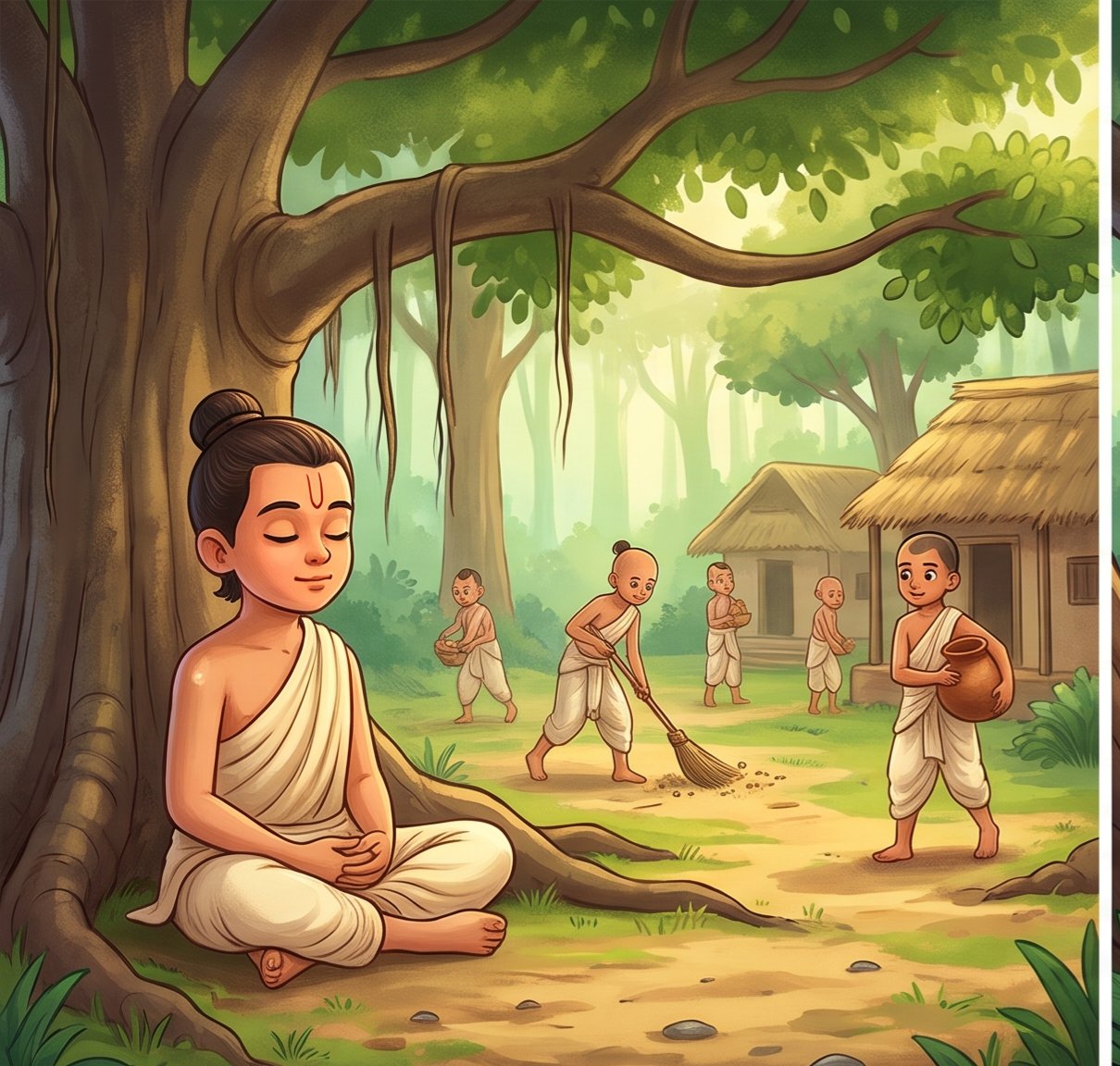
 Long ago, nestled inside a quiet, green forest, stood a peaceful Gurukul. Many young students lived there, learning scriptures, sciences, and the ways of life. Among them was a gentle, curious boy named Som. While Som loved learning, there were days when daily chores and studies felt overwhelming. One morning, their teacher, Acharya-ji, shared a lesson:
“Every action we perform brings a result. Good actions bring happiness, while thoughtless actions bring trouble.” Som listened carefully and thought to himself:
“If every action brings a consequence, isn’t it easiest to do nothing at all? If I do nothing, there will be no trouble, no mistakes, and no work! I will sit completely still, just like a stone.” The next morning, while the other students swept the courtyards, watered the flower beds, and recited their lessons, Som quietly slipped away. He sat beneath the sprawling shade of a giant banyan tree, closed his eyes, and decided not to move a single muscle all day. Within a short while, his stomach gave a loud rumble. “Wait,” Som thought, surprised. “My stomach is working! It is digesting and asking for breakfast.” He squeezed his eyes tighter and tried to freeze his thoughts. Yet, his mind began to race:
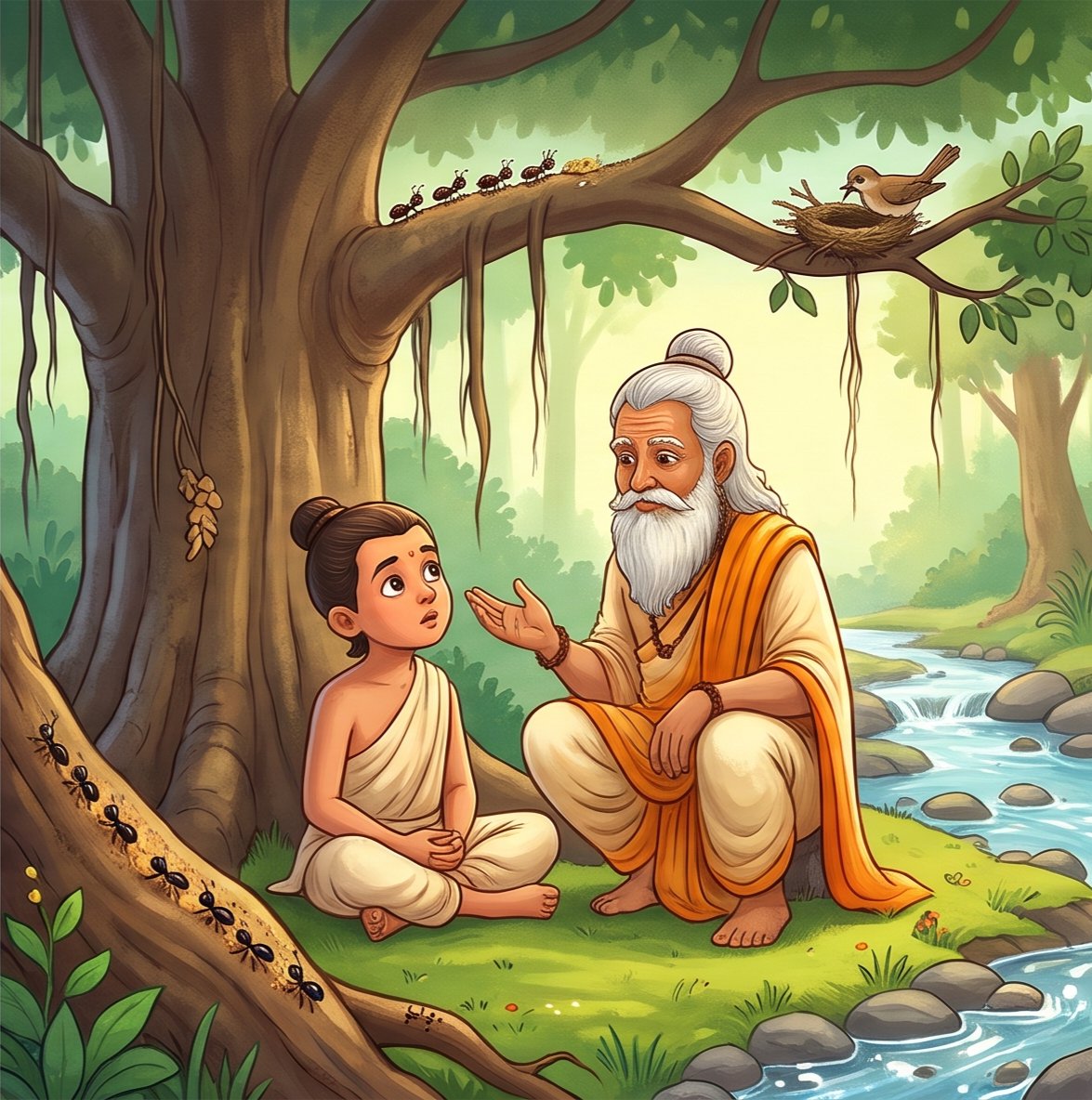
“What will Mother cook today? What game will we play at sunset? Did the baby squirrel find its acorn?” Som opened his eyes, puzzled. “I am sitting perfectly still, so why is my mind running across the whole forest?” Looking around, he noticed a tiny ant crawling along the tree trunk. It was carrying a grain of rice three times its own size. The ant slipped, tumbled down, picked the grain back up, and climbed again. A little sparrow flew by, tirelessly carrying dry twigs to build a warm nest for her chicks. A clear forest brook bubbled nearby, dancing over pebbles without pausing for even a second.
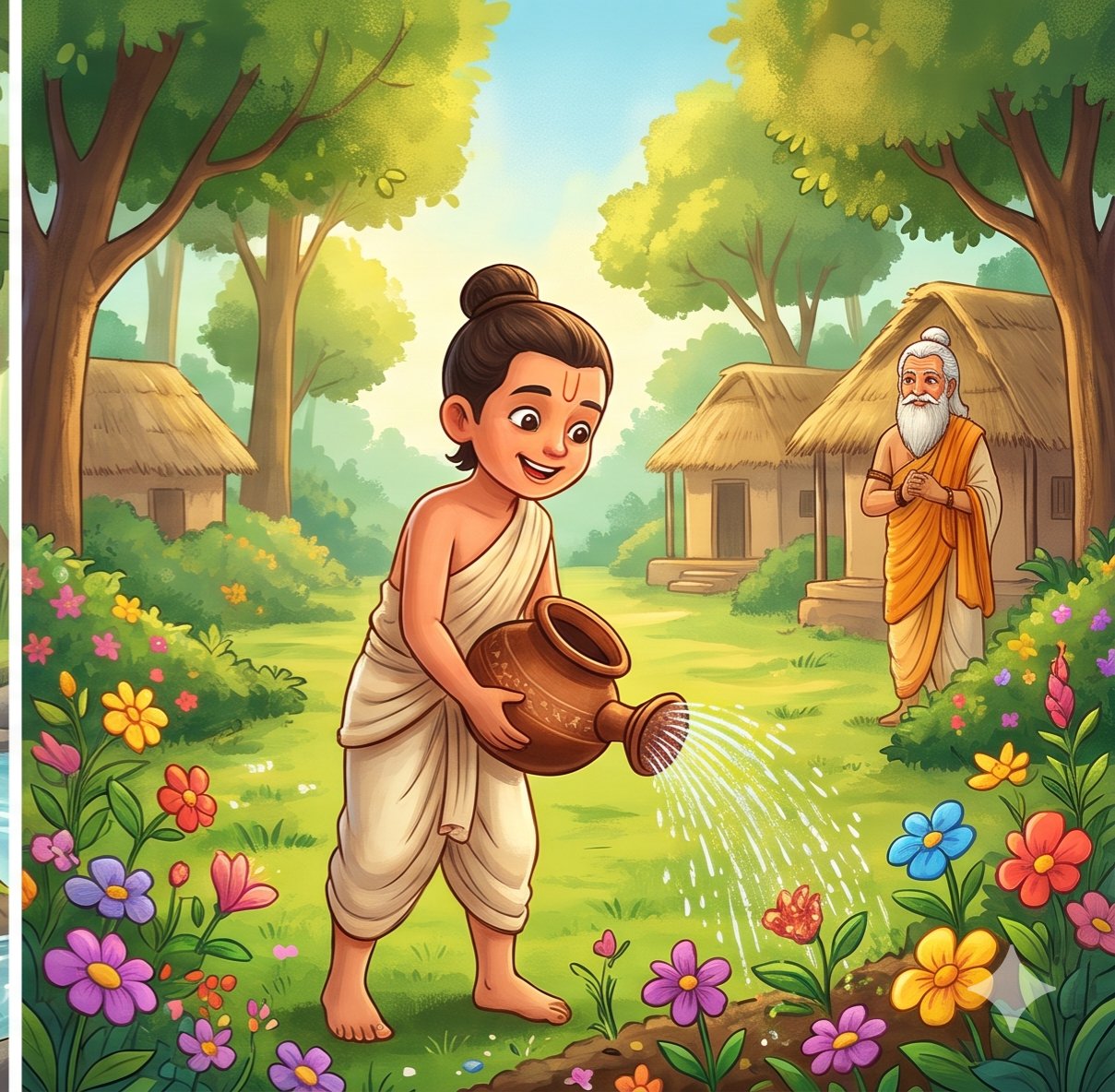 Just then, Acharya-ji walked past. Seeing Som sitting with furrowed brows, he asked with a gentle smile, “What are you doing here all alone, Som?” Som looked up earnestly. “Acharya-ji, I tried to do nothing at all! I thought if I stayed completely still, I wouldn’t create any actions or consequences. But my experiment failed. My lungs keep breathing, my stomach keeps grumbling, my eyes keep looking, and my mind keeps wandering everywhere! Is it truly impossible to stop doing things?” Acharya-ji patted Som’s head affectionately and sat down beside him. ”You have discovered a profound truth of nature, Som,” Acharya-ji said softly. “The sacred verses teach us that no living being in this universe can remain inactive even for a single moment. Our body, breath, and mind belong to nature, and nature is always in motion. Even when you try to sit idle, you are still performing an action—the action of being inactive, which only makes the mind restless.” He pointed to the sparkling stream flowing nearby. “Look at this river. It stays sweet, clean, and fresh because it keeps flowing. If it stopped moving, the water would turn muddy and dry up. The ants, the birds, the wind, and the morning sun—everything in creation works continuously with devotion. Since action is unavoidable, why not choose actions that are kind, helpful, and creative?” Som understood the lesson immediately. True peace didn’t come from running away from duty or sitting idle; it came from putting one’s heart into good deeds. Beaming with joy, Som touched his teacher’s feet, ran toward the garden, picked up a wooden bucket, and began watering the thirsty flowering plants. As the fresh water soaked into the earth, his restless mind felt light and joyful again. Moral of the Story
Life Is Continuous Movement: Idleness is an illusion. When we try to avoid our responsibilities, our minds become scattered and dull. Channel Energy Positively: Since we are always acting—through our thoughts, words, or deeds—we should consciously choose actions that help others, help us learn, and make the world around us brighter.
”Since escaping action is impossible, why not let go of laziness and choose deeds that are noble, help others, and teach us something new?”
The lesson
No one can stay still for even a moment. Choose your action well.
Story: Original tale