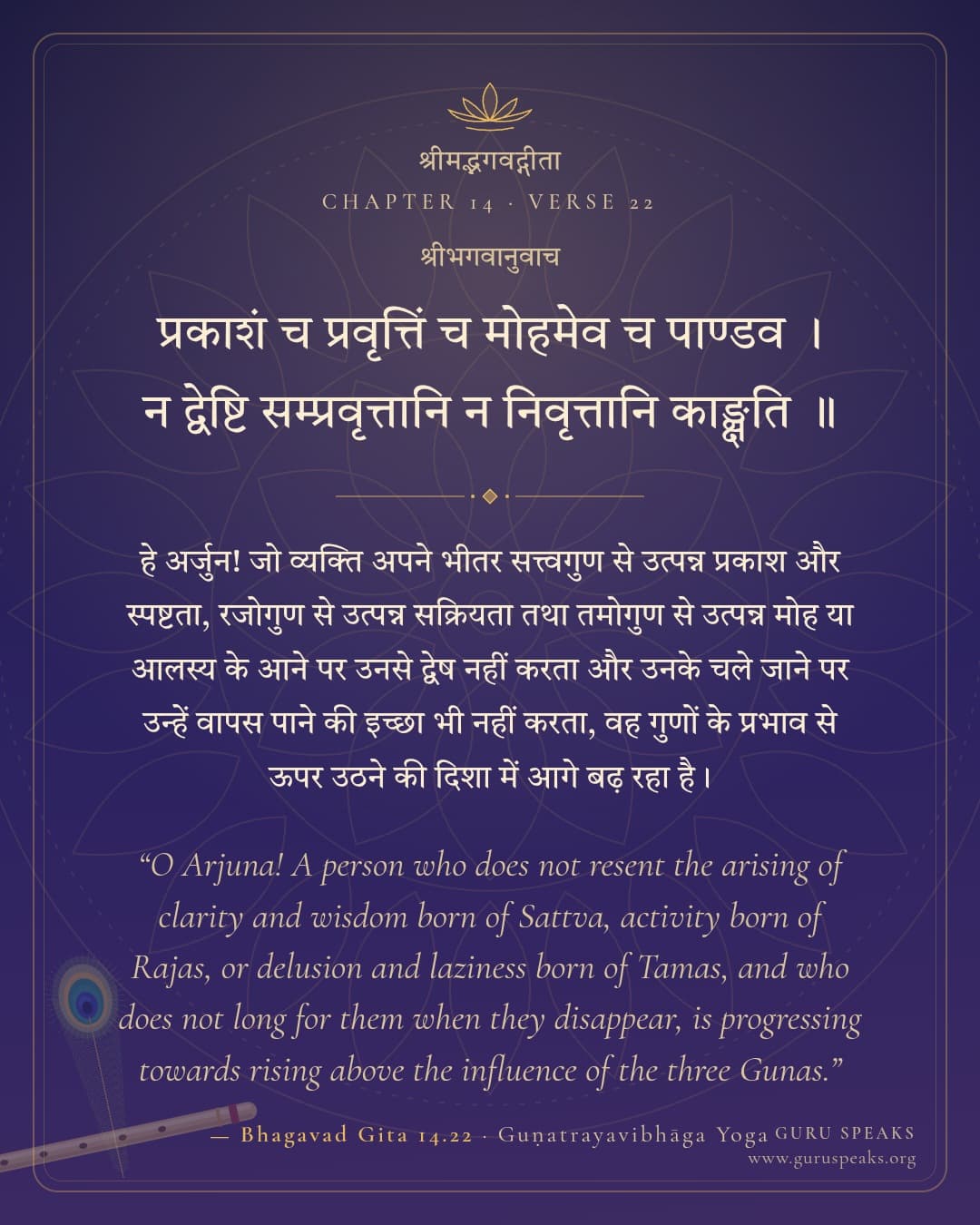
Bhagavad Gita · Chapter 14 · Guṇatrayavibhāga Yoga · Verse 22
Neither resist what comes nor cling to what goes. — Bhagavad Gita 14.22 meaning in Hindi and English
Sanskrit shloka · संस्कृत श्लोक
श्रीभगवानुवाच
प्रकाशं च प्रवृत्तिं च मोहमेव च पाण्डव । न द्वेष्टि सम्प्रवृत्तानि न निवृत्तानि काङ्क्षति ॥
prakāśaṃ ca pravṛttiṃ ca mohameva ca pāṇḍava na dveṣṭi sampravṛttāni na nivṛttāni kāṅkṣati
Hindi meaning · हिंदी अर्थ
हे अर्जुन! जो व्यक्ति अपने भीतर सत्त्वगुण से उत्पन्न प्रकाश और स्पष्टता, रजोगुण से उत्पन्न सक्रियता तथा तमोगुण से उत्पन्न मोह या आलस्य के आने पर उनसे द्वेष नहीं करता और उनके चले जाने पर उन्हें वापस पाने की इच्छा भी नहीं करता, वह गुणों के प्रभाव से ऊपर उठने की दिशा में आगे बढ़ रहा है।
English meaning
“O Arjuna! A person who does not resent the arising of clarity and wisdom born of Sattva, activity born of Rajas, or delusion and laziness born of Tamas, and who does not long for them when they disappear, is progressing towards rising above the influence of the three Gunas.”
Reflection for today · आज का चिंतन
“Let circumstances change and states of mind come and go, but may we always maintain our inner balance.” 🌼
— परिस्थितियाँ बदलती रहें, मन की अवस्थाएँ बदलती रहें, लेकिन हमारे भीतर का संतुलन बना रहे। 🌼
A story for this verse · एक कथा
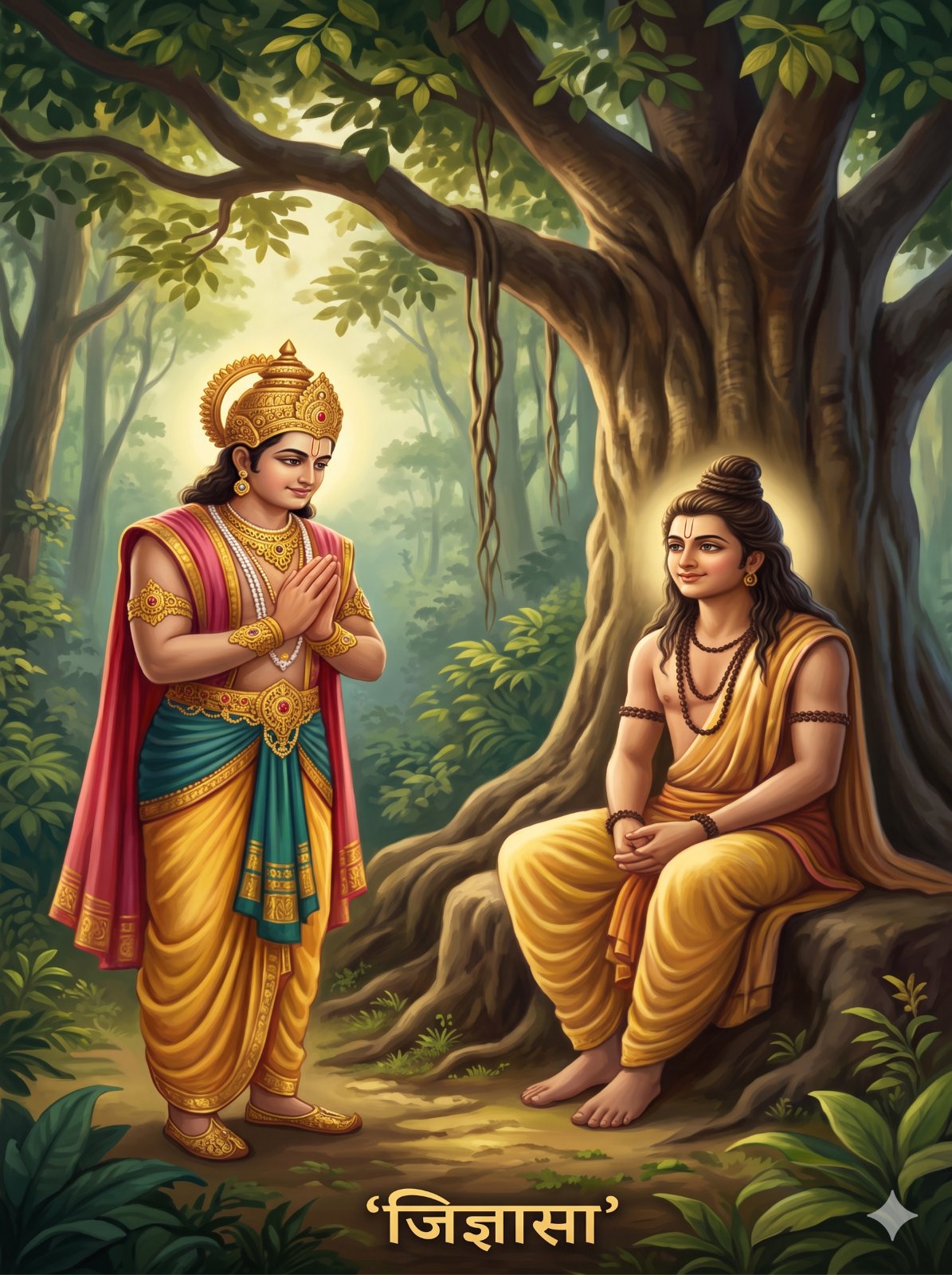
The Quest for Ultimate Peace: A Mind Like the Sky
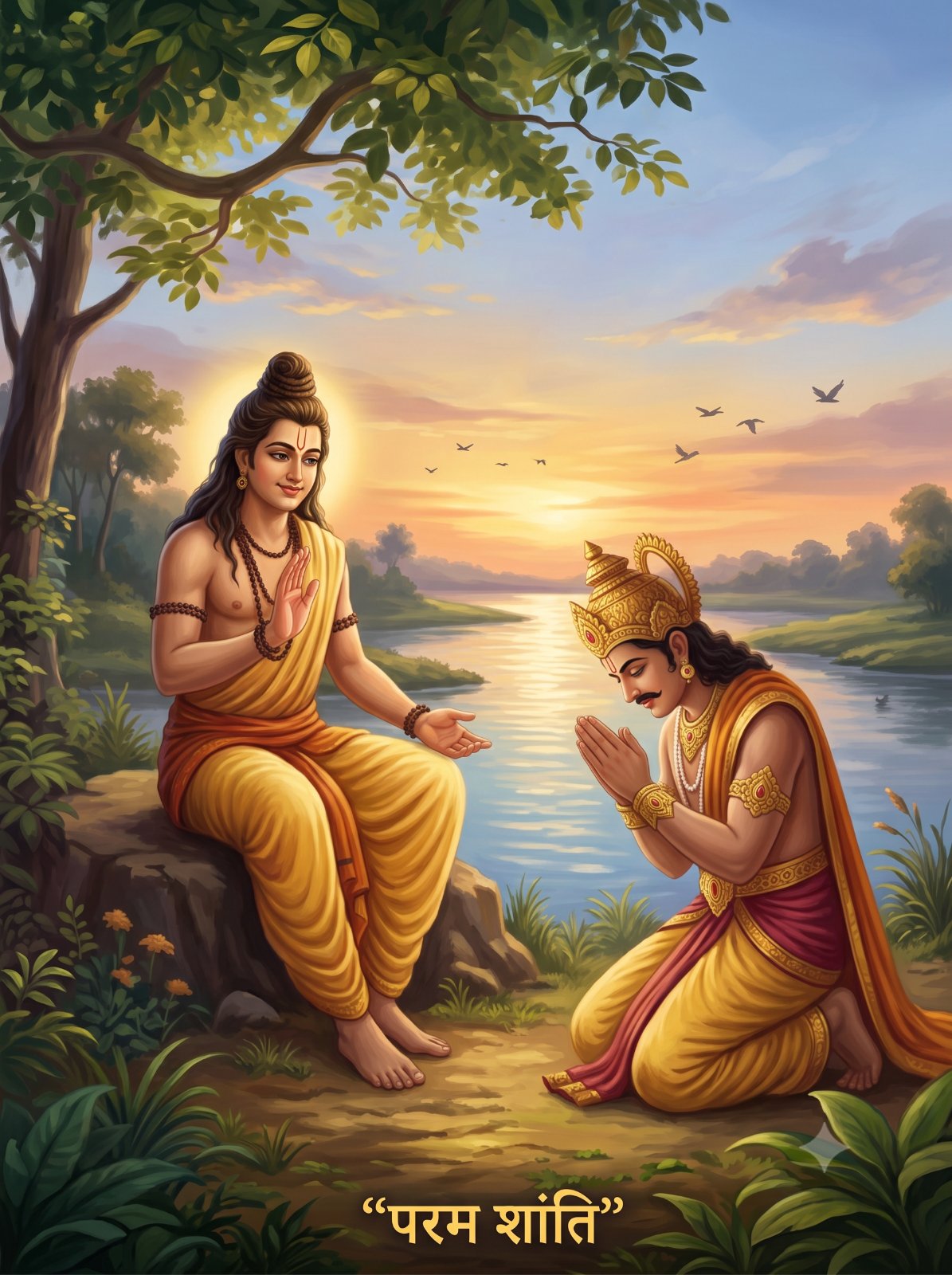 Once, King Yadu was traveling through a forest when he came across a peaceful, smiling young ascetic (the young sage Dattatreya) resting beneath the shade of a tree. His countenance radiated an unusual glow and deep contentment. Stopping beside him, King Yadu asked, “O noble sage! In this world where everyone seems troubled by worries, anxieties, or the relentless rush of life, how do you manage to remain so calm and joyful at all times?” The young ascetic smiled and replied, “O King! I have learned life’s greatest lessons from the simple elements of nature. Whenever feelings arise within me, I remember the wisdom of my three teachers—the sky, the wind, and the ocean.” Curious, the king asked, “What do they teach you?” The ascetic explained:
“My first and greatest teacher is the sky. At times, dense dark clouds gather, cloaking everything in shadow and gloom (Moha, or lethargy and ignorance). At other times, fierce storms break out, with howling winds and flashing lightning (Pravritti, or restless activity and agitation). And at times, the clouds vanish, welcoming golden sunshine and clear blue skies (Prakasha, or light and wisdom). Yet, does the sky resent the dark clouds when they arrive? No. Does it panic when the storm rages? No. And does it weep when the bright sunlight fades? Not at all. The sky merely watches these three conditions come and go. It remains ever vast, still, and unattached.” He continued, “In the same way, my second teacher is the wind. When it sweeps across a garden of blossoms, it touches sweet fragrance; when it blows over a heap of dust, it encounters foul odors—yet it clings to neither. And my third teacher is the ocean. During heavy rains, when overflowing rivers surge into it, it never breaks its shores; in harsh summers, even when rivers run dry, it never loses its depth.” King Yadu bowed his head and said, “Today I understand that true wisdom is being like the open sky—vast, steady, and undisturbed in every situation.” Just as the sky neither resents storms and dark clouds nor clings desperately to pleasant sunshine, we too should keep our minds steady and balanced—watching feelings of dullness, restlessness, or excitement pass by like visiting weather.
”Whether it is the darkness of lethargy, the restless rush of work, or the light of wisdom that arises in the mind—without struggling against them, one should simply remain a calm witness, just like the sky.”
The lesson
Neither resist what comes nor cling to what goes.
Story: Original tale