Bhagavad Gita · Chapter 12 · Bhakti Yoga · Verse 13
Be friendly and compassionate toward everyone, without ego. — Bhagavad Gita 12.13 meaning in Hindi and English
Sanskrit shloka · संस्कृत श्लोक
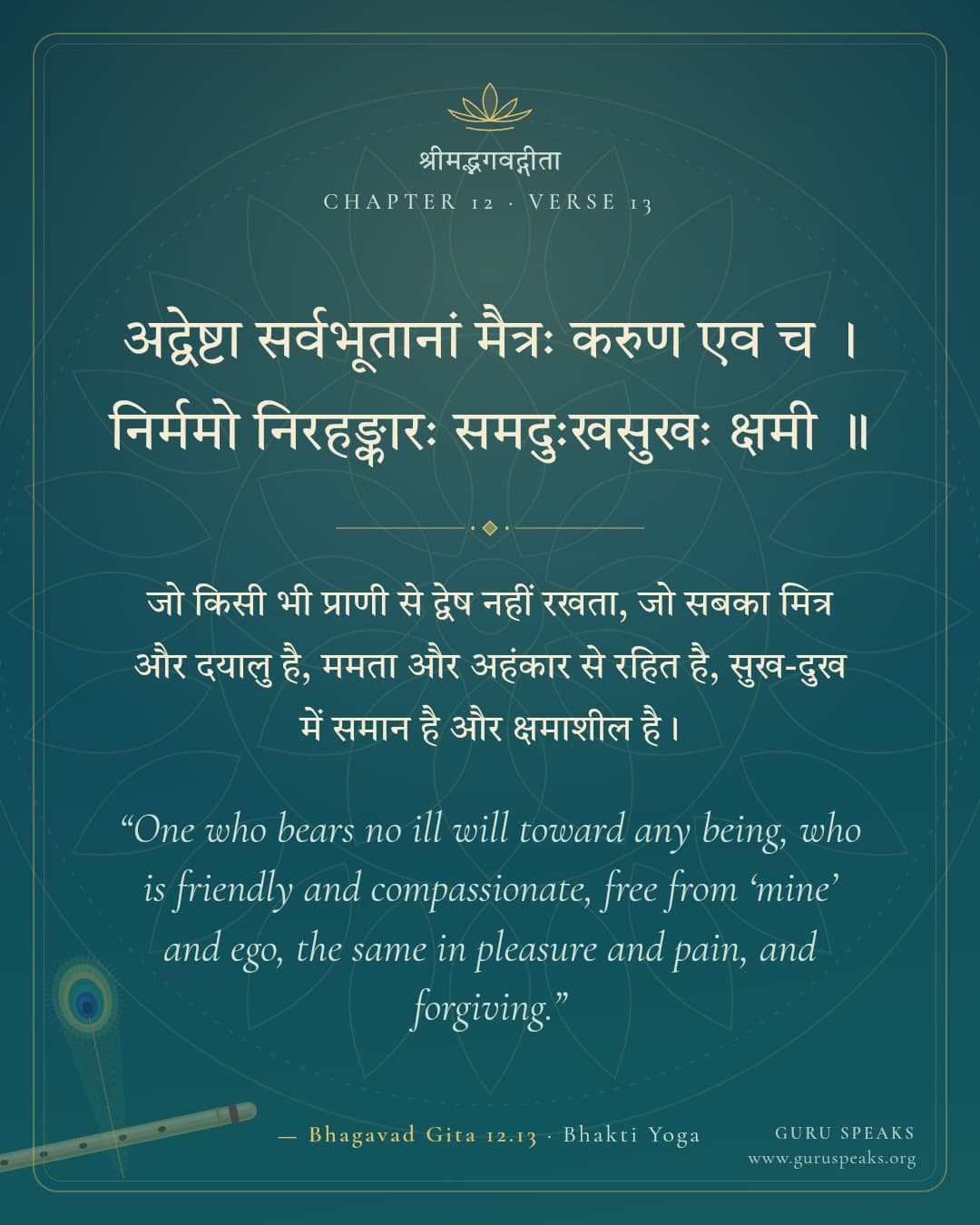
अद्वेष्टा सर्वभूतानां मैत्रः करुण एव च । निर्ममो निरहङ्कारः समदुःखसुखः क्षमी ॥
adveṣṭā sarvabhūtānāṃ maitraḥ karuṇa eva ca nirmamo nirahaṅkāraḥ samaduḥkhasukhaḥ kṣamī
Hindi meaning · हिंदी अर्थ
जो किसी भी प्राणी से द्वेष नहीं रखता, जो सबका मित्र और दयालु है, ममता और अहंकार से रहित है, सुख-दुख में समान है और क्षमाशील है।
English meaning
“One who bears no ill will toward any being, who is friendly and compassionate, free from ‘mine’ and ego, the same in pleasure and pain, and forgiving.”
Reflection for today · आज का चिंतन
This is a description of a beautiful heart: kind, humble and forgiving. Choose one of these qualities to practise today.
यह एक सुंदर हृदय का वर्णन है: दयालु, विनम्र और क्षमाशील। आज इनमें से किसी एक गुण का अभ्यास कीजिए।
A story for this verse · एक कथा

Beyond Malice: The Immortal Spirit
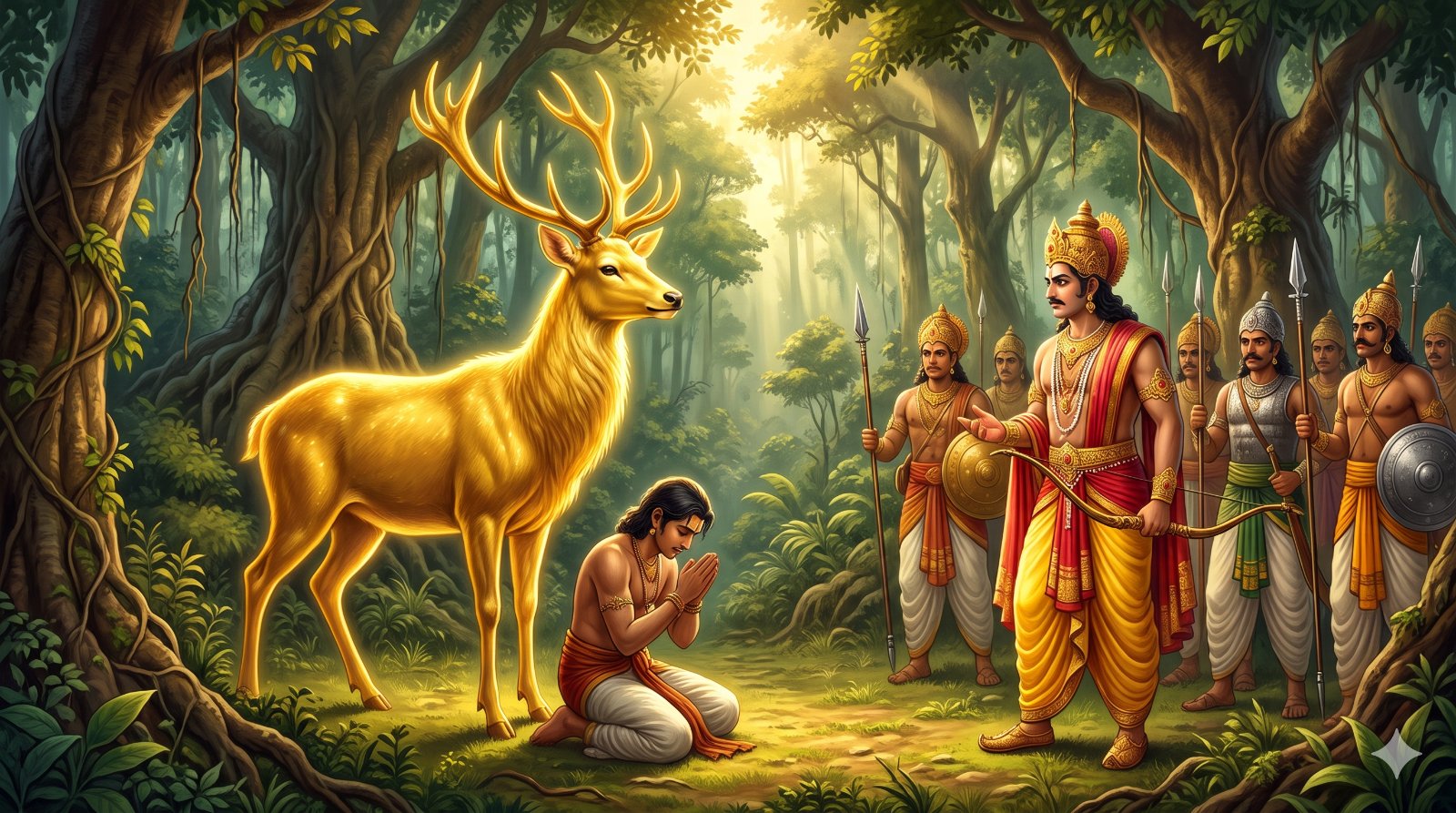 This tale originates from the ancient Jātaka stories, known as the Ruru Jātaka, in which the Bodhisattva took birth as a divine, golden-hued deer named Ruru. This narrative stands as an extraordinary testament to unconditional compassion, equanimity, and supreme forgiveness. Deep within an undisturbed forest, the Ruru deer was revered not merely for his radiant, enchanting beauty, but far more for his serene and benevolent nature. He harbored universal goodwill toward every living creature, large and small, entirely free from the slightest trace of malice, ego, or enmity. One evening, a young man was swept away by the raging currents of a torrential river bordering the forest. Driven by crushing debt and worldly despair, he had plunged into the waters to end his life. Hearing his desperate cries for help, Ruru gave no thought to his own safety. Transcending fear and self-preservation, he leapt into the perilous whirlpools, carried the drowning man upon his back, and brought him safely to the shore. Throughout the night, the deer comforted him, preserved his life with his own body’s warmth, and gathered wild fruits to nourish him. Upon parting ways, the deer made only one gentle request: “Dear friend, lest hunters slay me for my golden coat, I beseech you never to disclose my dwelling place to anyone.” Overcome with gratitude, the youth vowed eternal silence and loyalty. Some time later, the King of Kashi proclaimed a lavish reward of pure gold coins and fertile estates to anyone who could lead him to the legendary golden deer. Blinded by greed, the ungrateful youth abandoned his sacred promise and led the royal army straight into the secluded heart of the forest. The soldiers swiftly encircled Ruru. The king notched an arrow to his bow, ready to strike. Yet, Ruru neither trembled in fear nor flared in rage. Remaining completely tranquil—equipoised in the face of life and death, joy and sorrow—he addressed the king in a calm, dignified voice: “O King, who has guided your path to my hidden sanctuary?” Driven by avarice, the young man stepped forward and pointed a trembling finger at the noble creature. When the king realized that this very deer had rescued the man from the river’s depths, he was overcome with indignation at such vile treachery. Turning his bow toward the youth’s chest, the king declared, “He who betrays his savior deserves nothing less than death!” Instantly, Ruru stepped forward, placing his own body as a shield before the treacherous man, and pleaded:
”O King, stay your hand and forgive him. Hatred can never be quelled by hostility; it is overcome only by love. He has merely lost his way, ensnared by ignorance and delusion. Grant him his promised reward, and harbor no ill will in your heart.” Witnessing such malice-free love and boundless forgiveness toward a betrayer, tears filled the king’s eyes. Moved to his core, the monarch lowered his weapon and immediately proclaimed royal protection for all wildlife throughout his kingdom. The life of Ruru stands as living proof of the sacred truth: one who remains untouched by ego, harbors no hatred, and returns betrayal with profound forgiveness is a true sage and enlightened soul.
“Greed and ignorance may lead a person astray, but the truly wise is one who, even while enduring deep wounds, never lets their inner compassion falter.”
The lesson
Be friendly and compassionate toward everyone, without ego.
Story: Original tale