Bhagavad Gita · Chapter 6 · Dhyāna Yoga · Verse 16
Balance, not extremes, is the way to a steady life. — Bhagavad Gita 6.16 meaning in Hindi and English
Sanskrit shloka · संस्कृत श्लोक
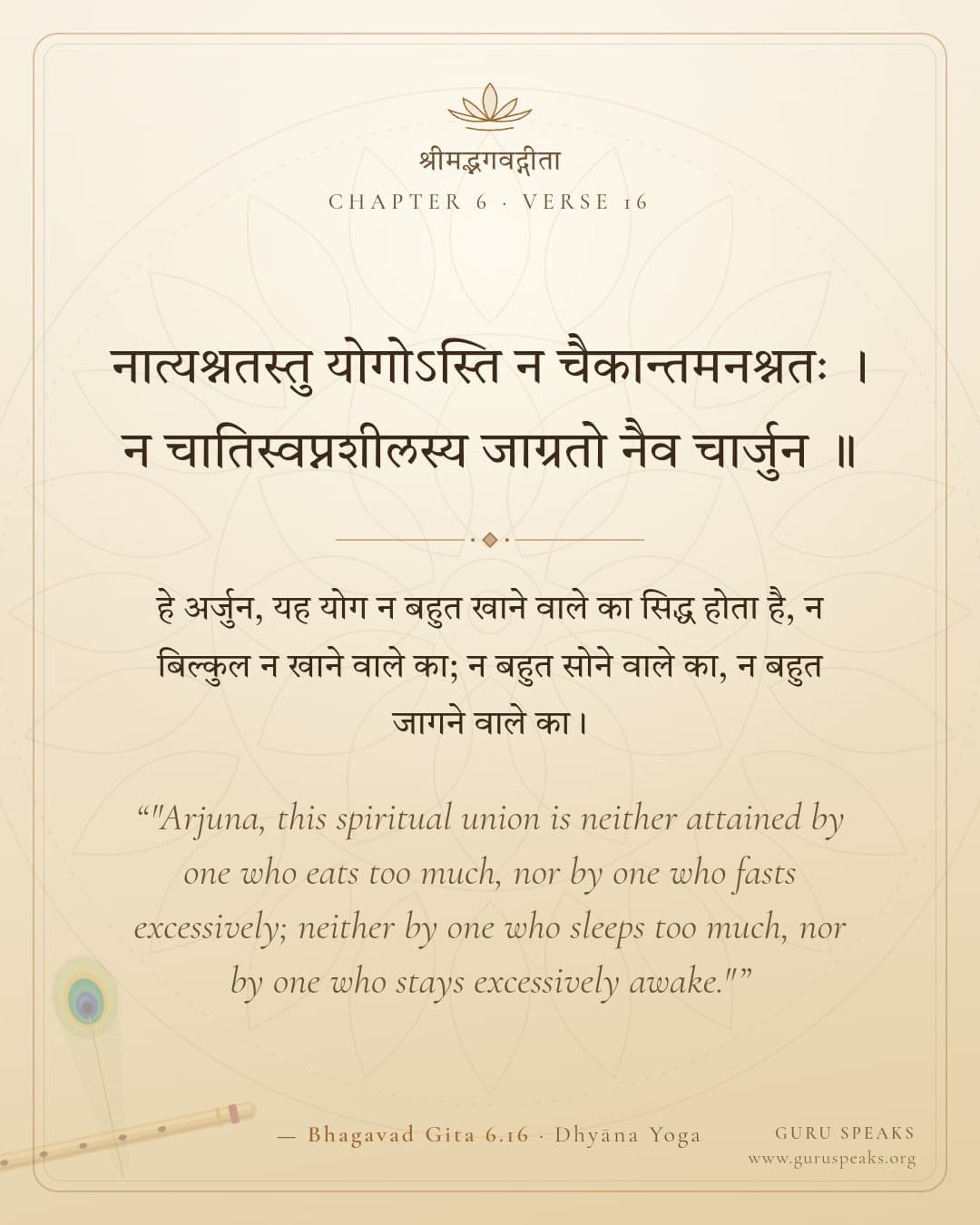
नात्यश्नतस्तु योगोऽस्ति न चैकान्तमनश्नतः । न चातिस्वप्नशीलस्य जाग्रतो नैव चार्जुन ॥
nātyaśnatastu yogo’sti na caikāntamanaśnataḥ na cātisvapnaśīlasya jāgrato naiva cārjuna
Hindi meaning · हिंदी अर्थ
हे अर्जुन, यह योग न बहुत खाने वाले का सिद्ध होता है, न बिल्कुल न खाने वाले का; न बहुत सोने वाले का, न बहुत जागने वाले का।
English meaning
“"Arjuna, this spiritual union is neither attained by one who eats too much, nor by one who fasts excessively; neither by one who sleeps too much, nor by one who stays excessively awake."”
Reflection for today · आज का चिंतन
Neither overdoing nor neglecting: that is the middle path. Check today whether your food, rest and work are in balance.
न अति, न उपेक्षा: यही मध्यम मार्ग है। आज देखिए कि आपका खान-पान, आराम और काम संतुलन में हैं या नहीं।
A story for this verse · एक कथा

The Sacred Balance: The Path to Spiritual Harmony
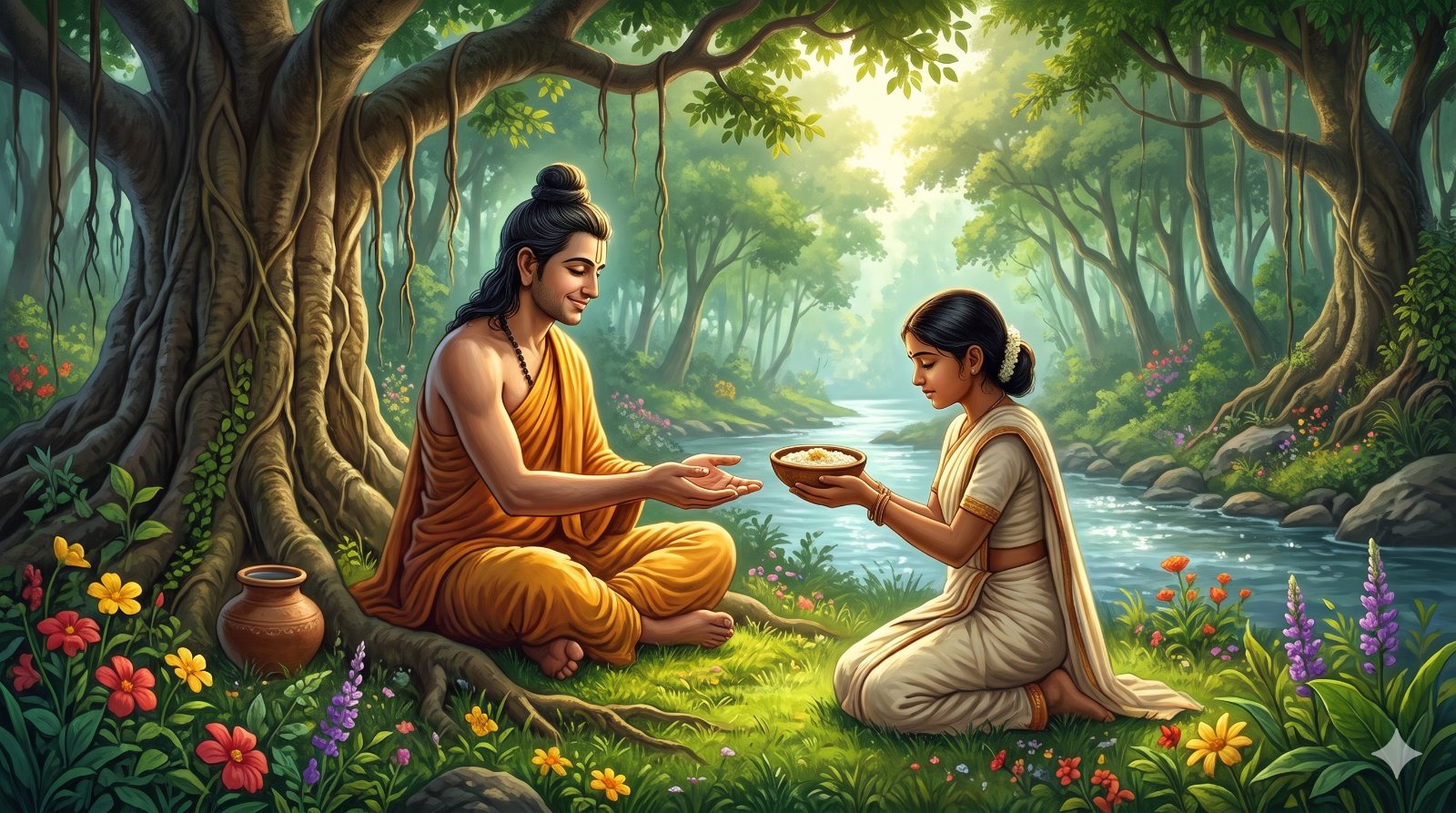 Once upon a time, the Bodhisattva was engaged in deep spiritual practice in a dense forest, seeking truth and ultimate wisdom. A thought took hold of his mind: the more hardship I inflict upon my body, the swifter I shall attain enlightenment. Driven by this fierce resolve, he renounced all food and water. For days on end, he starved himself and remained awake through the long nights, refusing both restful sleep and physical ease. Gradually, his once radiant body withered away. His eyes grew sunken, and his strength faded so entirely that he could barely sit upright. Instead of bringing peace, this extreme exhaustion only made his mind restless. One evening, as he sat resting in the shade of a tree beside a river, a group of women passed by singing melodies while practicing the veena (a traditional stringed lute). Their song drifted gently across the breeze:
”Tighten not the strings so taut that they snap in two,
Nor leave them so loose that no sweet music can ring true.” Hearing these simple words, a spark of divine insight ignited within the Bodhisattva’s heart. He reflected: “How profound and true this is! This physical body is just like the strings of a veena. If I stubbornly starve myself and abandon sleep, I tighten the string of life until it snaps. Yet, if I indulge in overeating and idle slumber, the string becomes too loose to play any sacred melody.” In that sacred moment, he realized that the authentic way is the ‘Middle Path’—the path of divine balance. Just then, Sujata, a kind and gentle maiden from a nearby village, arrived at the grove. Seeing the sage trembling from sheer weakness, she stepped forward with deep reverence and offered him a bowl of nourishing sweet rice pudding (kheer). With a tranquil smile, the Bodhisattva broke his fast and accepted the nourishment. As vitality returned to his body, he rested and allowed his fatigue to dissolve. Now nourished and refreshed, his mind became profoundly calm, clear, and concentrated. Entering meditation from this state of perfect balance, he attained supreme peace and awakening. The Moral:
This tale teaches that whether in studies, daily habits, or spiritual growth, true excellence blossoms only through balance. Neither excessive indulgence nor extreme deprivation bears fruit. Just like tuning the strings of an instrument with care, harmonizing our daily life is the true key to peace and mastery.
“Tighten not the strings of life so taut that they snap, nor leave them so loose that no melody emerges; spiritual mastery lies neither in extreme deprivation nor in excessive indulgence, but purely in the balance of the Middle Path.”
The lesson
Balance, not extremes, is the way to a steady life.
Story: Buddhist tale