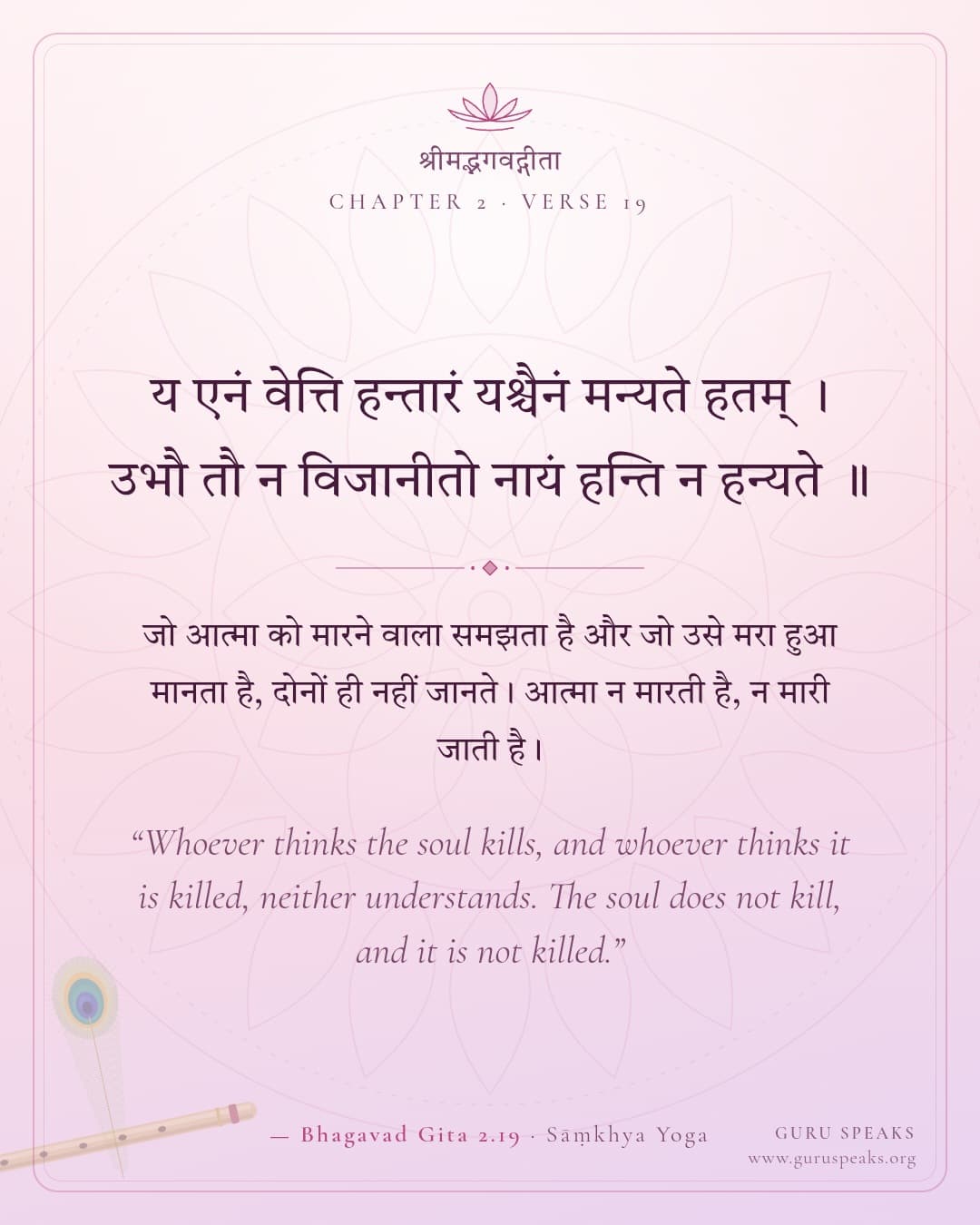
Bhagavad Gita · Chapter 2 · Sāṃkhya Yoga · Verse 19
The soul neither kills nor is killed. — Bhagavad Gita 2.19 meaning in Hindi and English
Sanskrit shloka · संस्कृत श्लोक
य एनं वेत्ति हन्तारं यश्चैनं मन्यते हतम् । उभौ तौ न विजानीतो नायं हन्ति न हन्यते ॥
ya enaṃ vetti hantāraṃ yaścainaṃ manyate hatam ubhau tau na vijānīto nāyaṃ hanti na hanyate
Hindi meaning · हिंदी अर्थ
जो आत्मा को मारने वाला समझता है और जो उसे मरा हुआ मानता है, दोनों ही नहीं जानते। आत्मा न मारती है, न मारी जाती है।
English meaning
“Whoever thinks the soul kills, and whoever thinks it is killed, neither understands. The soul does not kill, and it is not killed.”
Reflection for today · आज का चिंतन
“I am not the body; I am the eternal soul, which never dies. Understanding this truth helps us rise above fear and attachment and live life with inner strength and peace.”
"मैं शरीर नहीं, शाश्वत आत्मा हूं, जो कभी मरती नहीं, इस सत्य को समझकर भय और मोह से मुक्त होकर जीवन जीना ही गीता की सीख है।”
A story for this verse · एक कथा
The Imperishable Soul: Illusion and Awakening
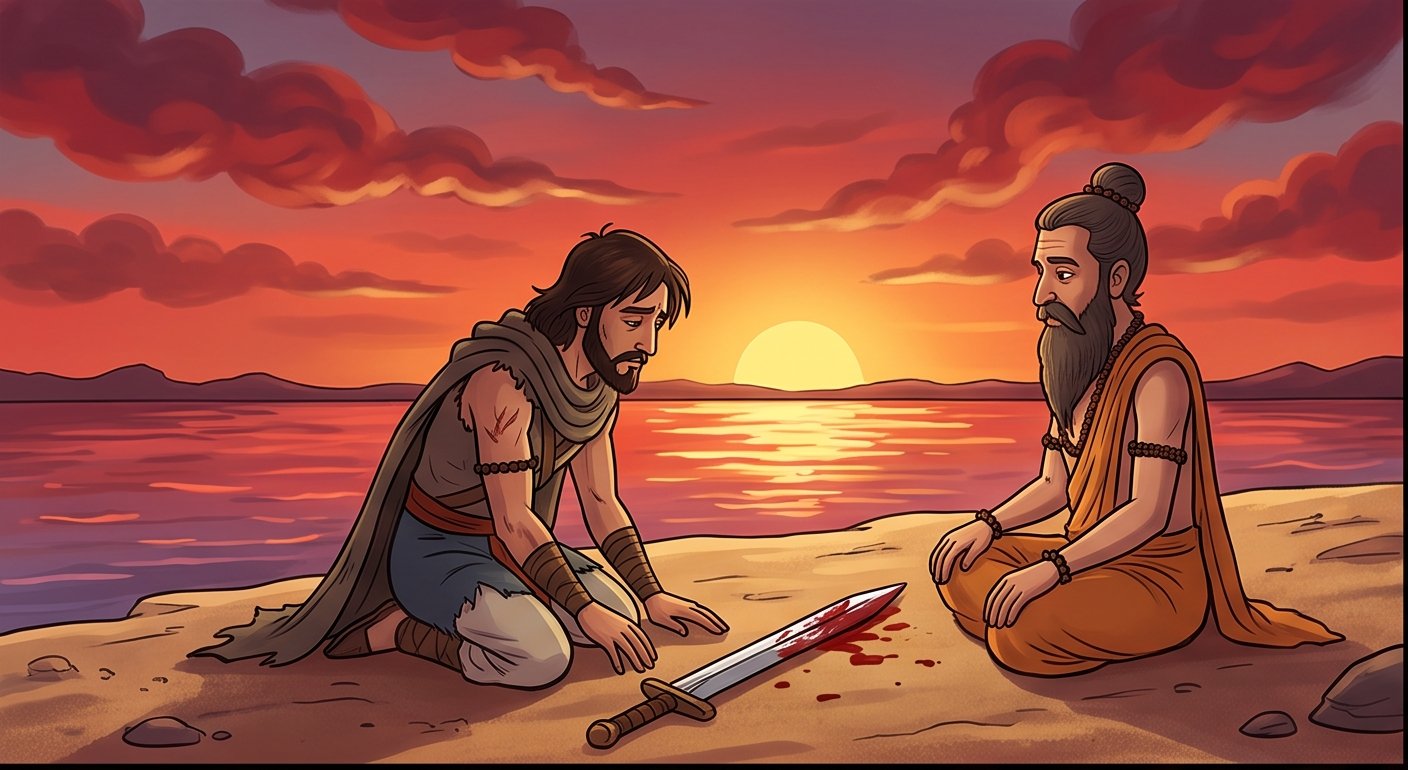
 On the tranquil banks of the Ganges, beneath the crimson glow of a dying sun, a heavy iron sword clattered onto the river stones. Its keen edge bore the dark traces of dried blood, and the man who cast it down—the formidable warrior Rudradatta—stood broken, shrouded in remorse and despair.
Trembling from within, Rudradatta sank to his knees, pressing his forehead against the feet of the hermit Sage Bodhayana. “Master, my soul is ablaze with torment,” he whispered, his voice choked with grief. “In the name of defending borders, I have slaughtered hundreds on the battlefield. I am a butcher—a destroyer of countless souls. In the quiet of night, their lifeless eyes stare back at me, and I am haunted by the terror that tomorrow another blade will extinguish mine. Save me from this agony.”
Sage Bodhayana looked upon the weeping warrior with calm, piercing eyes. After a moment of silence, he spoke gently. “Arise, Rudradatta. You have discarded the steel that severed the bodies of others, but you have not yet cast away the ignorance with which you mutilate your own spirit.”
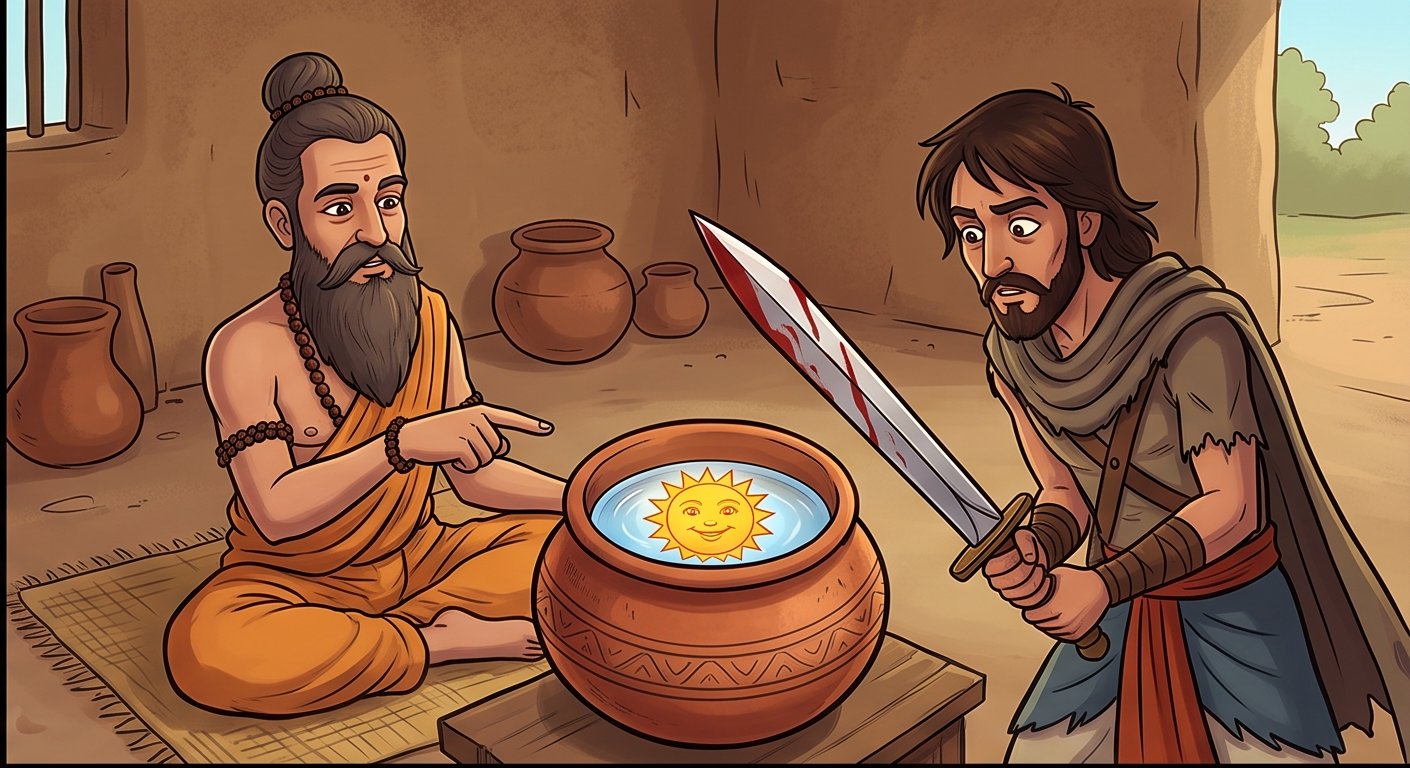
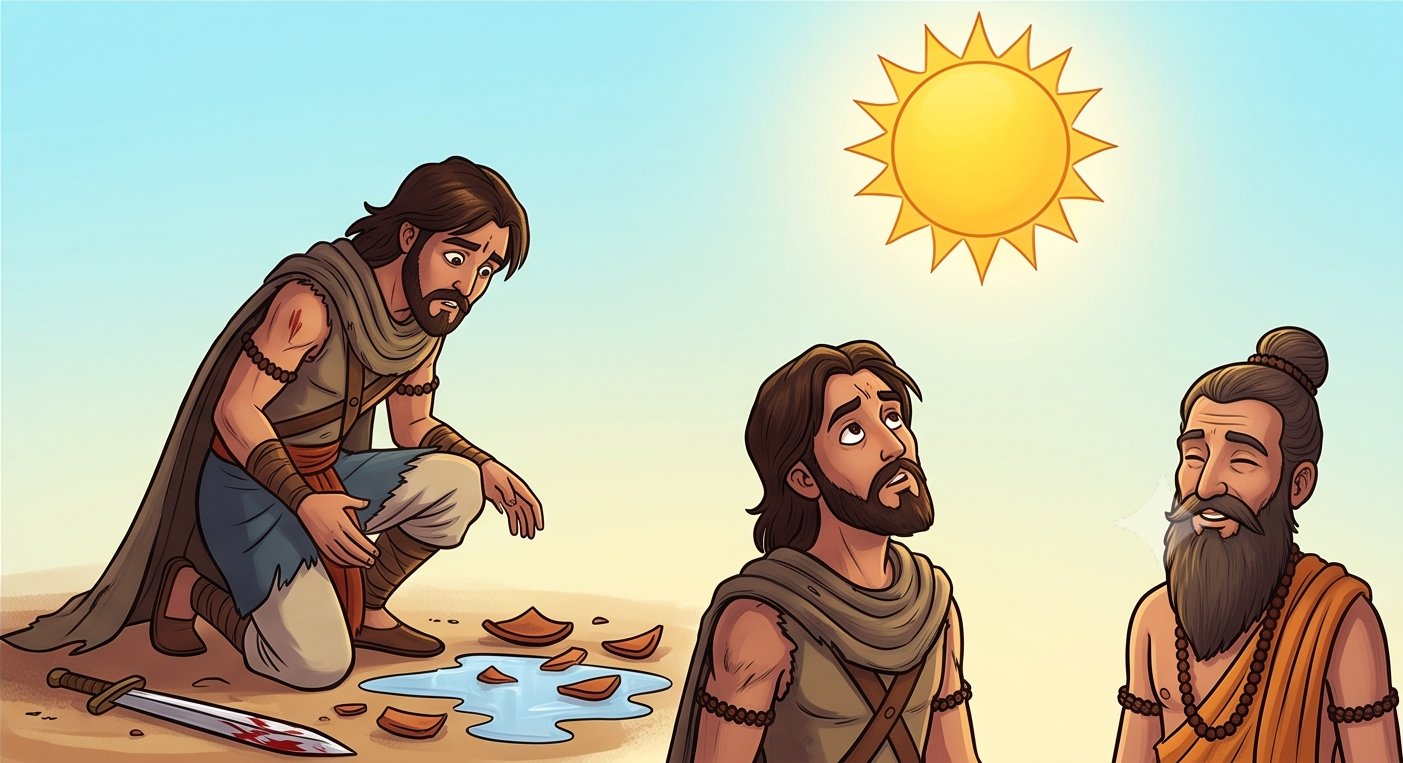
The sage motioned to his hermitage and had an earthen pot filled to the brim with calm water placed before them. In the still surface of the water, the brilliant orb of the setting sun was mirrored with perfect clarity.
“Rudradatta,” the sage commanded, “take up your blade once more and slay the sun trapped within this vessel.”
Confused and hesitant, thinking the sage was testing his sanity, Rudradatta nonetheless gripped the hilt. With a sweeping blow, his sword smashed into the clay pot. Shards scattered across the ground, the water seeped into the dry earth, and the mirrored disc vanished into nothingness.
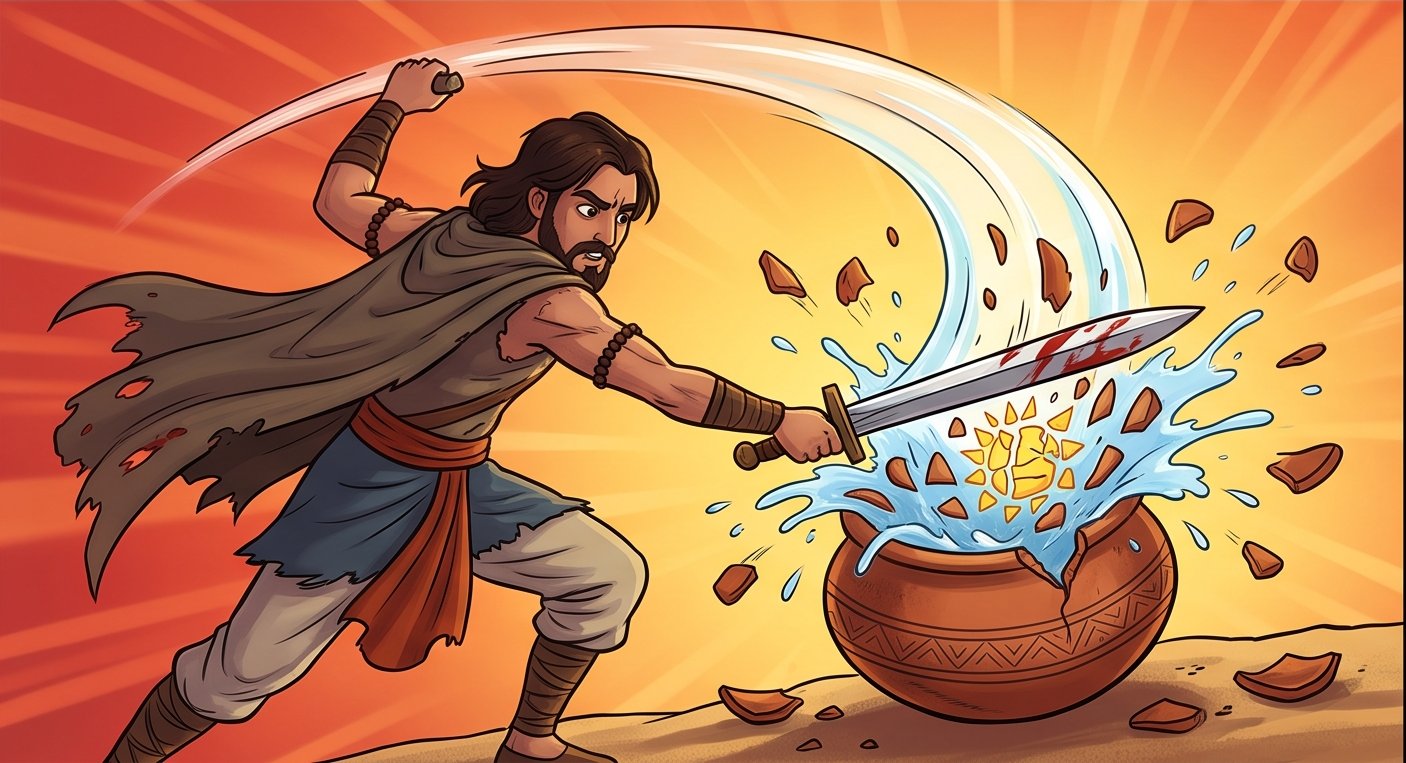 “Tell me, Rudradatta,” the sage asked softly, “have you slain the sun? Did your blade cut its light into pieces?”
Rudradatta reflexively raised his gaze to the heavens. High above, the great celestial fire burned on—serene, undivided, and completely untouched.
“No, Master,” Rudradatta replied, lowering his head. “The blade only shattered clay and spilled water. The sun remains steadfast in the sky. A sword can only reach earth and water; it cannot touch light.”
Sage Bodhayana smiled. “That is the eternal truth. The body is the vessel of clay, the mind is the reflective water, and the Soul is the sun in the sky. When a warrior strikes on the battlefield, he shatters only an earthen vessel through which consciousness was reflected. Just as the sun does not perish when the pot breaks, the Soul cannot be slain when the body falls.”
The sage’s voice grew resonant with ancient authority: “He who thinks, ‘I am the slayer,’ is as foolish as one who believes he killed the sun by breaking a jar. And he who trembles in dread, thinking, ‘I will be slain,’ is lost in the delusion of water that mistook its own reflection for the celestial fire. The Soul neither slays nor is it ever slain. It is neither the doer nor the deed; it is the imperishable witness.”
 Suddenly, heavy footfalls crashed through the adjoining grove. A young rebel soldier burst onto the clearing, his naked blade leveled straight at Rudradatta’s chest. Eyes burning with fury, he roared, “Rudradatta! Today you pay for your crimes! You killed my father in battle, and today I will end your life to give his soul rest!”
Rudradatta did not flinch, nor did he reach for his weapon. He stood tall and unarmored, his gaze devoid of fear, arrogance, or hostility.
Confronted by this profound stillness, the youth’s charge faltered. Unnerved, he demanded, “Why do you not draw your weapon? Have you no fear of death?”
Rudradatta looked at him with steady compassion. “Brother, even if your sword passes through this chest, you cannot kill me. You will merely tear a garment woven of dust and bone. And had I struck you down in defense, I could never have slain you either. The pride that made us believe we were the masters of each other’s life and death was nothing more than a shadow of delusion. What you seek to strike is clay; what I truly am, no weapon forged by man has the power to touch.”
There was no cowardice in Rudradatta’s voice, only the unshakable clarity of awakening. The young warrior’s resolve crumbled under the weight of that truth. His fingers loosened, and his sword tumbled into the sand.
As dusk settled over the quiet riverbank, the river lapped gently against the shore. There was no slayer left upon the sands, nor any to be slain—only two living souls, freed from the illusion of mortality, gazing together into the timeless and undivided light.
The lesson
The soul neither kills nor is killed.
Story: Maya tale