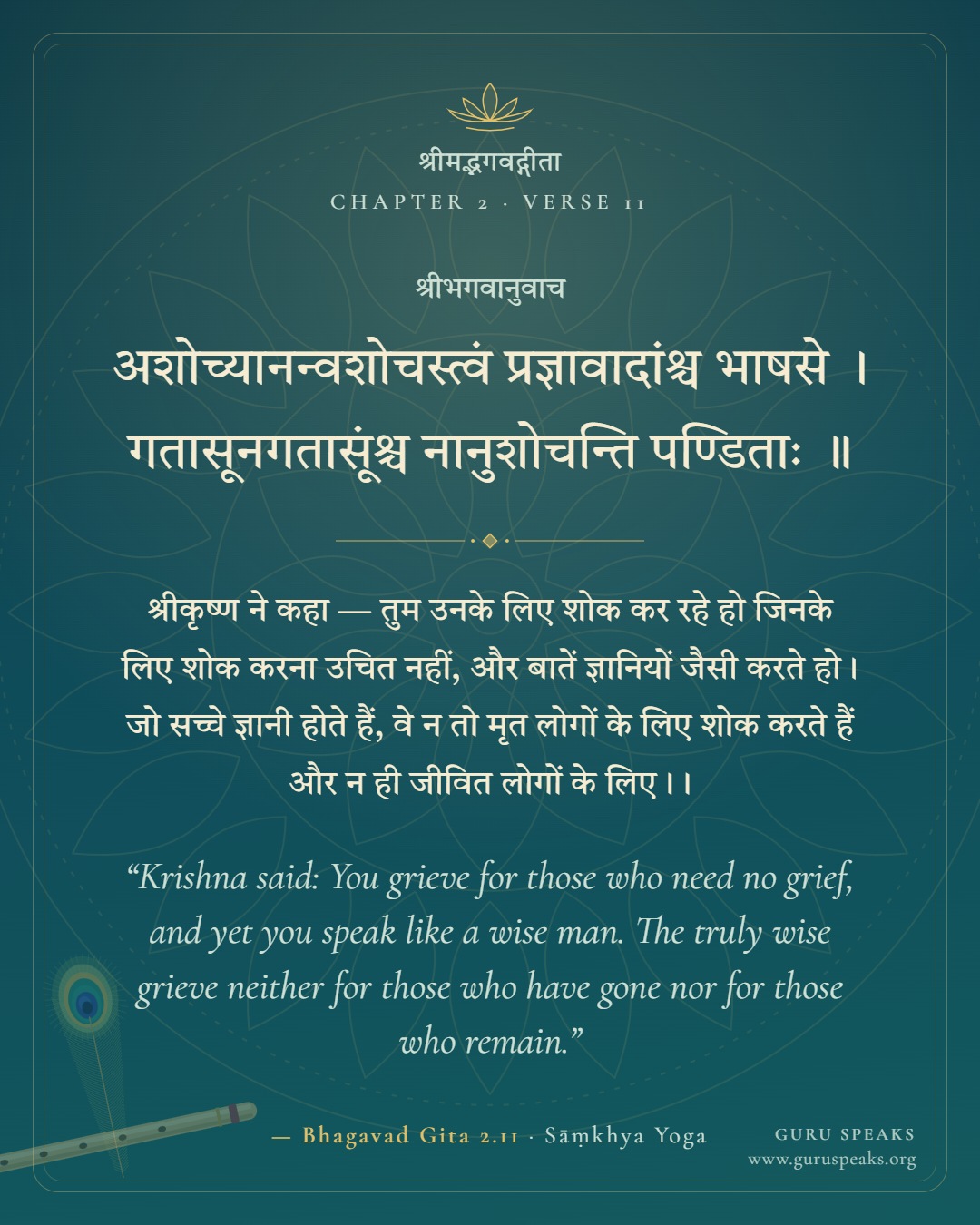
Bhagavad Gita · Chapter 2 · Sāṃkhya Yoga · Verse 11
The wise grieve neither for the living nor for the departed. — Bhagavad Gita 2.11 meaning in Hindi and English
Sanskrit shloka · संस्कृत श्लोक
श्रीभगवानुवाच
अशोच्यानन्वशोचस्त्वं प्रज्ञावादांश्च भाषसे । गतासूनगतासूंश्च नानुशोचन्ति पण्डिताः ॥
aśocyānanvaśocastvaṃ prajñāvādāṃśca bhāṣase gatāsūnagatāsūṃśca nānuśocanti paṇḍitāḥ
Hindi meaning · हिंदी अर्थ
श्रीकृष्ण ने कहा — तुम उनके लिए शोक कर रहे हो जिनके लिए शोक करना उचित नहीं, और बातें ज्ञानियों जैसी करते हो। जो सच्चे ज्ञानी होते हैं, वे न तो मृत लोगों के लिए शोक करते हैं और न ही जीवित लोगों के लिए।।
English meaning
“Krishna said: You grieve for those who need no grief, and yet you speak like a wise man. The truly wise grieve neither for those who have gone nor for those who remain.”
Reflection for today · आज का चिंतन
Grief is human, and Krishna does not ask us to stop loving. He invites us to see deeper: what is truly real in the people we love is never lost. Let that understanding soften the weight you carry today.
शोक होना स्वाभाविक है, पर जो हमारे प्रियजनों में सच्चा और शाश्वत है, वह कभी खोता नहीं। यह समझ मन का बोझ हल्का कर देती है।
A story for this verse · एक कथा

The Final Act
 King Jayanta loved the royal theater more than his throne. His favorite performer was a brilliant young actor named Madhav, who could move an entire hall to tears with a single gesture.
During the grand spring festival, Madhav played the role of an emperor betrayed in battle. In the final scene, as he delivered a passionate speech, he suddenly collapsed. A venomous scorpion, hidden inside his stage armor, had stung him. Before the curtain could fall, the young actor was dead.
The palace fell into shock. King Jayanta was inconsolable. He refused to let guards move the body, halted all court affairs, and forbade the city from lighting lamps. Standing on the stage beside the corpse, the King delivered grand, sorrowful speeches to his ministers.
“This is an outrage against cosmic balance!” the King proclaimed, weeping openly. “Madhav had unmatched virtue, devotion, and genius. If the divine order permits such greatness to be erased in its youth, then morality is a lie and life is pure cruelty! What is the purpose of righteous action when darkness swallows the innocent?”
For two days, the King debated the ministers, using brilliant philosophical logic to justify his boundless despair. He sounded like an enlightened sage, yet his heart was paralyzed by grief.
On the third morning, an old woman who cleaned the theater walked onto the stage. Ignoring the royal guards, she stepped over to Madhav’s body, untied his golden cape, and removed his fake crown, dropping them into her laundry basket.
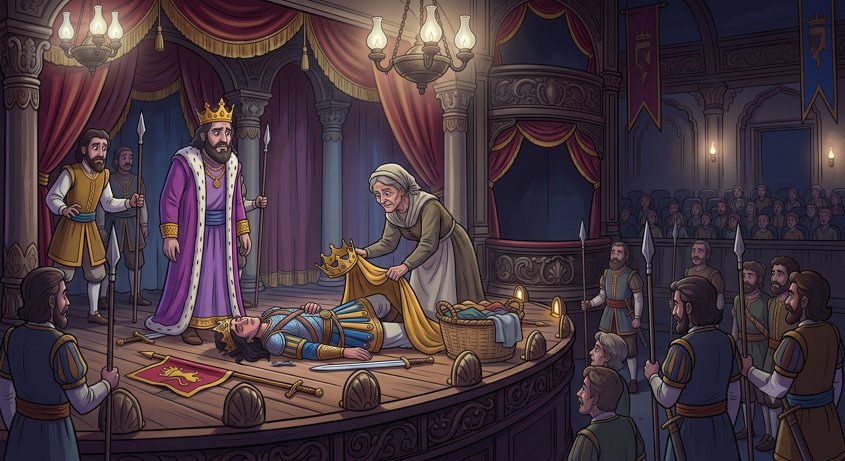 King Jayanta shouted in fury, “How dare you touch him! Do you have no respect for this great tragedy?”
The old woman looked up without fear.
“Your Majesty speaks like a great philosopher,” she said calmly, “yet you weep like a confused spectator who forgot he was watching a play.”
The King frowned. “He is dead!”
“Madhav was never an emperor,” the woman replied softly. “He merely put on a costume, spoke his assigned lines, and exited into the dressing room behind the curtain. Why weep for the actor who has finished his work and gone home? And why weep for those of us still on stage, waiting for our cue to exit? The truly wise mourn neither for the dead nor for the living. Both are only playing roles that must end. You speak words of high wisdom, my King, but you are crying over empty silk.”
The King stood frozen. The grandeur of his speeches collapsed beneath the simple truth. He looked down at the empty crown in the basket, wiped his face, and quietly ordered the performance of the final rites.
The lesson
The wise grieve neither for the living nor for the departed.
Story: Original tale