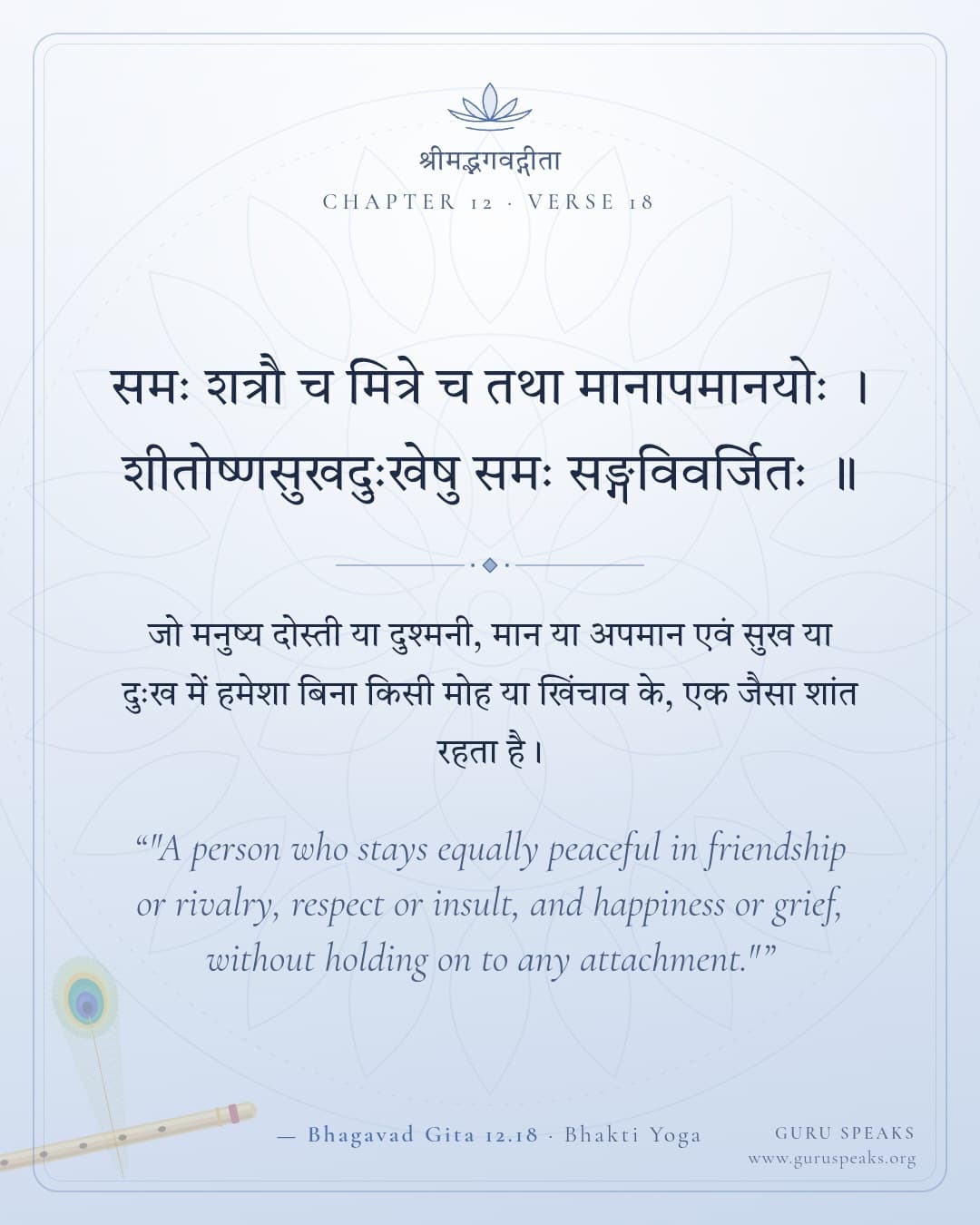
Bhagavad Gita · Chapter 12 · Bhakti Yoga · Verse 18
Treat friend and foe (enemy) alike with steady grace. — Bhagavad Gita 12.18 meaning in Hindi and English
Sanskrit shloka · संस्कृत श्लोक
समः शत्रौ च मित्रे च तथा मानापमानयोः । शीतोष्णसुखदुःखेषु समः सङ्गविवर्जितः ॥
samaḥ śatrau ca mitre ca tathā mānāpamānayoḥ śītoṣṇasukhaduḥkheṣu samaḥ saṅgavivarjitaḥ
Hindi meaning · हिंदी अर्थ
जो मनुष्य दोस्ती या दुश्मनी, मान या अपमान एवं सुख या दुःख में हमेशा बिना किसी मोह या खिंचाव के, एक जैसा शांत रहता है।
English meaning
“"A person who stays equally peaceful in friendship or rivalry, respect or insult, and happiness or grief, without holding on to any attachment."”
Reflection for today · आज का चिंतन
"This teaching is not about renouncing the world, but about that inner strength where, regardless of external circumstances, inner peace remains unshaken."
यह सीख दुनिया छोड़ने की नहीं, बल्कि मन की उस मजबूती का नाम है जहाँ बाहर चाहे जो भी परिस्थिति हो, भीतर की शांति नहीं डगमगाती।
A story for this verse · एक कथा
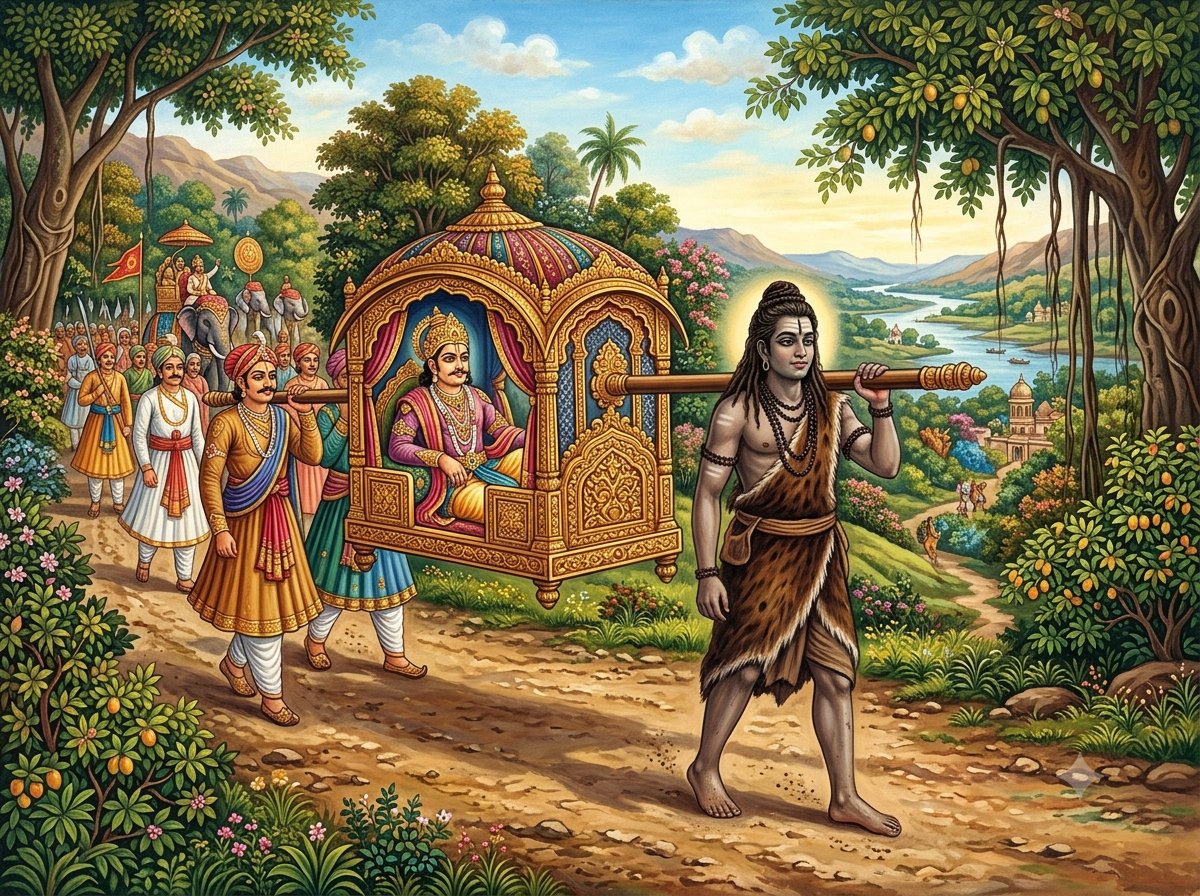
”From Ego to Enlightenment: The Equanimity of Sage Jadabharata”
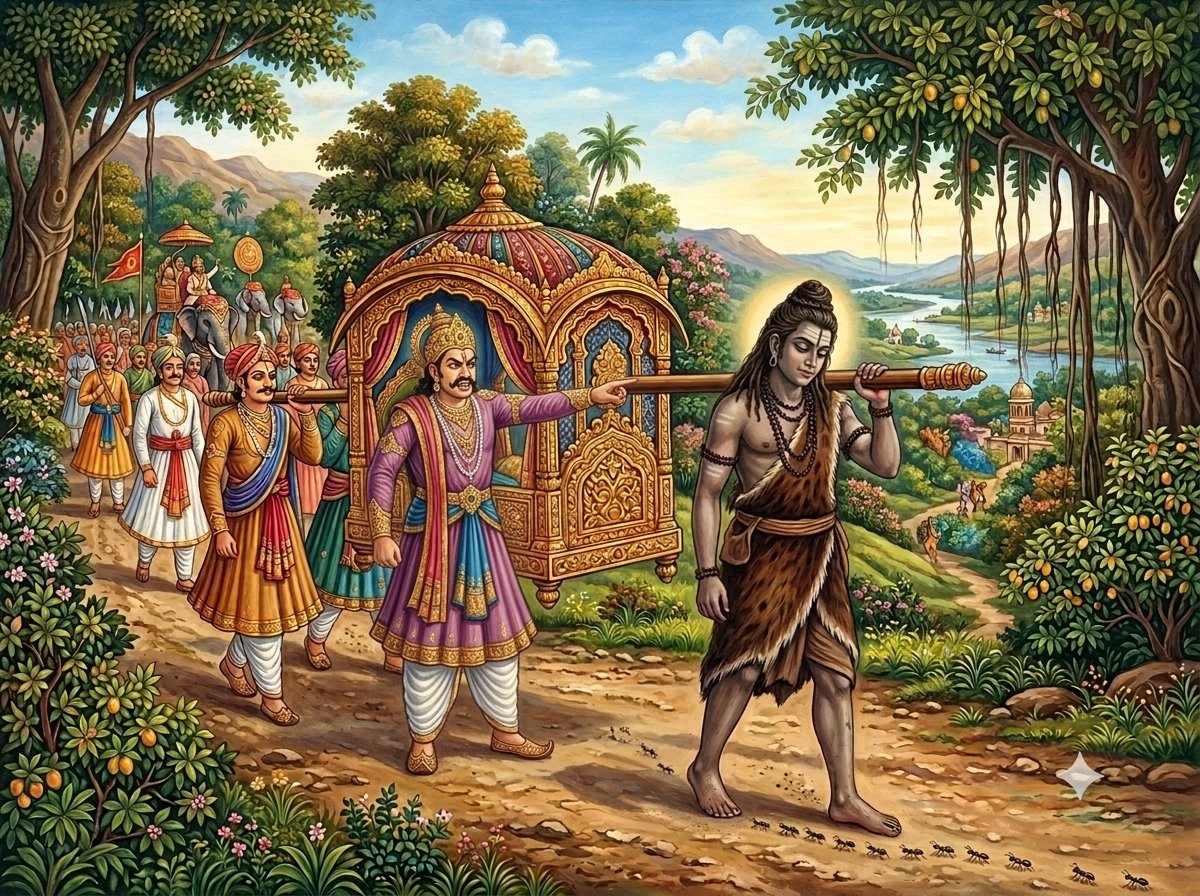 King Rahugana of the Sauvira kingdom was traveling in his royal palanquin in search of spiritual wisdom. Along the journey, one of the palanquin bearers fell ill. Spotting Jadabharata—a sturdy-looking ascetic passing by—the king’s soldiers pressed him into service without knowing who he truly was. Being an enlightened soul firmly rooted in equanimity, Jadabharata quietly placed the palanquin pole upon his shoulder without any protest, hesitation, or sense of humiliation. As he walked, Jadabharata remained deeply mindful of the ground beneath his feet, ensuring he did not crush any ants or tiny living beings. Out of compassion for these creatures, he frequently slowed down, adjusted his pace, or altered his stride. Consequently, the palanquin began to sway and jolt unsteadily. Disturbed by the erratic movement, the king became irritated and looked out from behind the curtains in anger. Halting the palanquin, the furious king mocked Jadabharata with bitter sarcasm and threatened him with severe punishment.
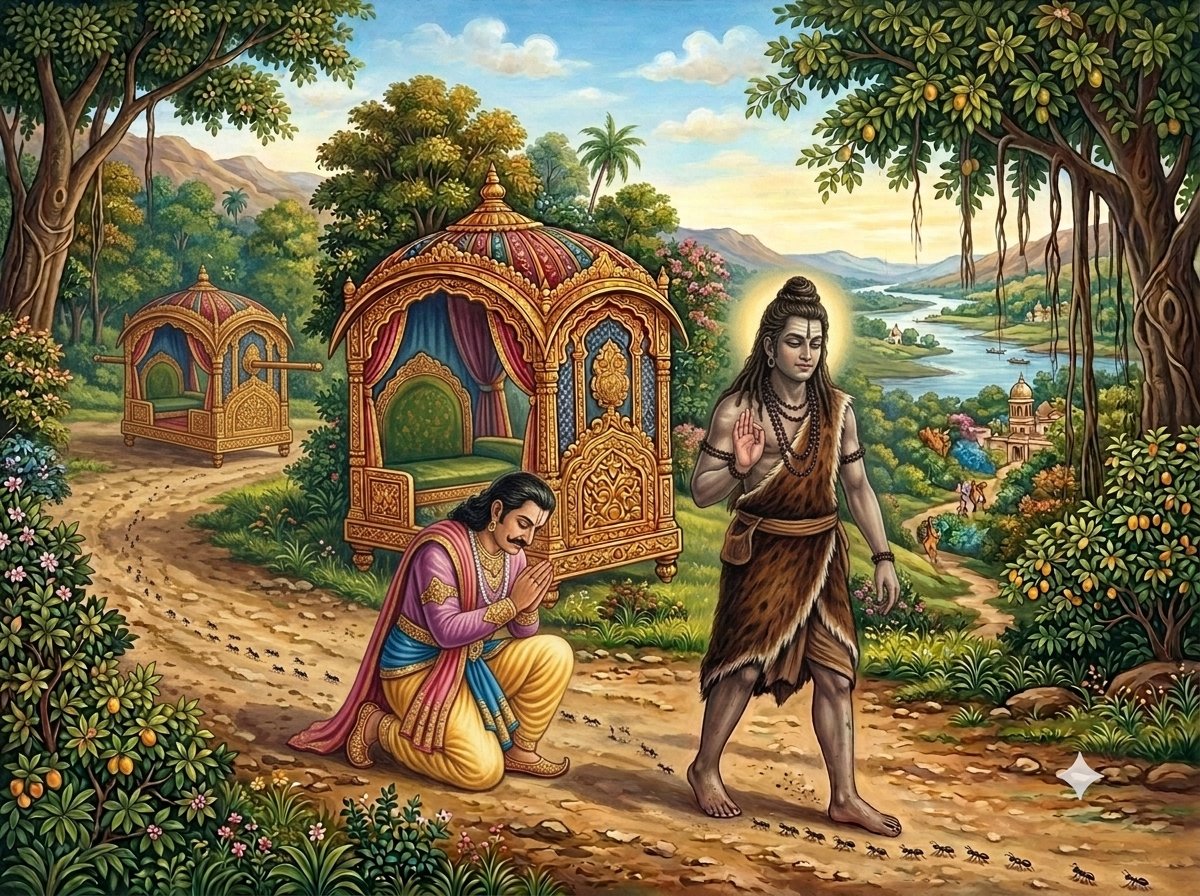 Despite the humiliating reprimands, Jadabharata felt neither anger nor fear. With a serene smile and gentle voice, he replied: “O King, what you describe as weary or frail is merely this body of five elements. Honor and dishonor, pleasure and pain, fear and anger belong to the physical body and the false ego, not to the eternal soul. To me, you are not an enemy, nor am I your servant. Punishment can only afflict the mortal frame, never the conscious Self.” Hearing these profound words, King Rahugana’s arrogance instantly dissolved. Realizing he stood before a great sage, the king stepped down from the palanquin, fell prostrate at Jadabharata’s feet, and pleaded for forgiveness. Just as Jadabharata had remained undisturbed by the king’s insults, he now remained entirely unaffected by his praise and reverence. Remaining balanced in both honor and humiliation, he imparted the highest wisdom of the Self to the king and calmly continued on his way, completely detached and free.
”A true sage is one who is neither shaken by dishonor nor inflated by praise.”
The lesson
Treat friend and foe (enemy) alike with steady grace.
Story: Original tale